Blog
-
Beyond Kepware: Why Modern Industrial Connectivity Demands a Second Look

Kepware isn't chosen, it's assumed. It appears in budgets like line items for electricity or insurance. No one questions it. No one compares it. It just... goes in.
read more... -
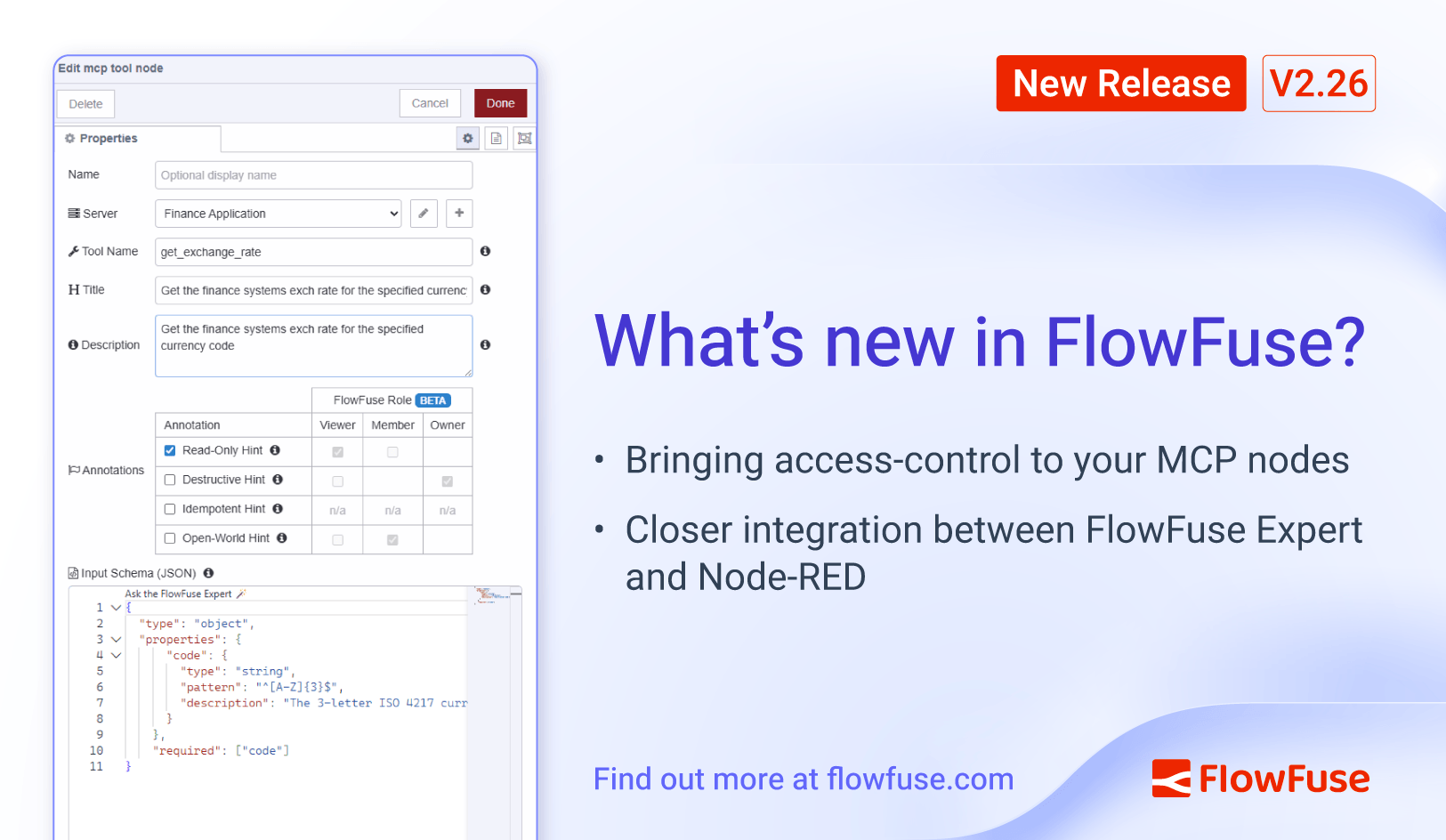
FlowFuse 2.26: Bringing access-controls to your MCP nodes
With the holiday break sitting in the middle of this release cycle, it's a smaller release than usual this month. But that hasn't stopped us continuing to make the FlowFuse Expert even more useful.
-

What Is a System Integrator? Understanding Manufacturing's Most Misunderstood Role
Most factories don't get built all at once. They evolve. Someone buys a robot in 2018. A conveyor system gets added when production ramps up. Last year, a vision system showed up because quality was slipping. Every piece from a different vendor, every piece with its own manual, its own software, its own way of doing things.
And somehow, it all has to work together.
-
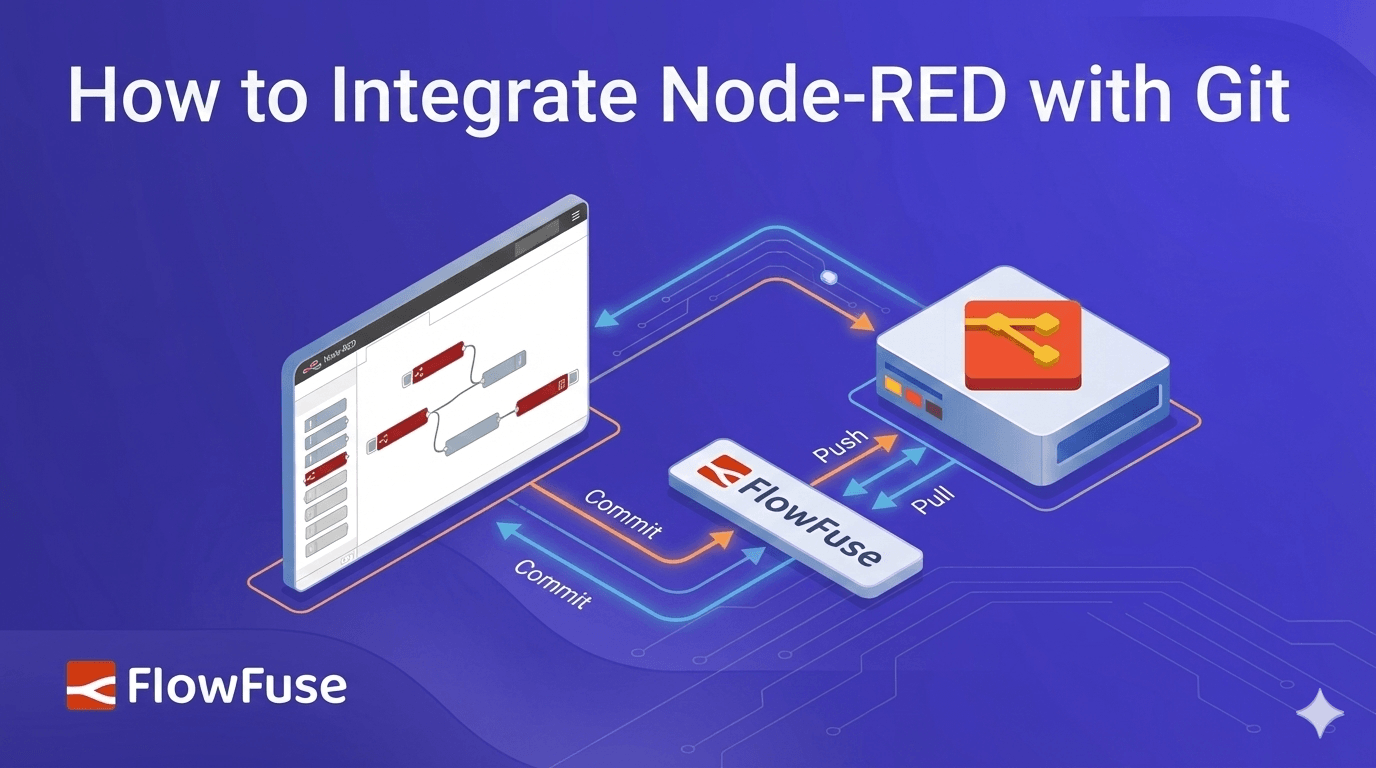
Integrating Git within Node-RED Workflow with FlowFuse
If you've been using Node-RED in production, you already know the pain points. Flows get complex. Teams grow. Someone makes a change that breaks production at 2 AM. You need to roll back, but which version was working? Who approved this deployment? How do you keep your dev environment in sync with production?
-
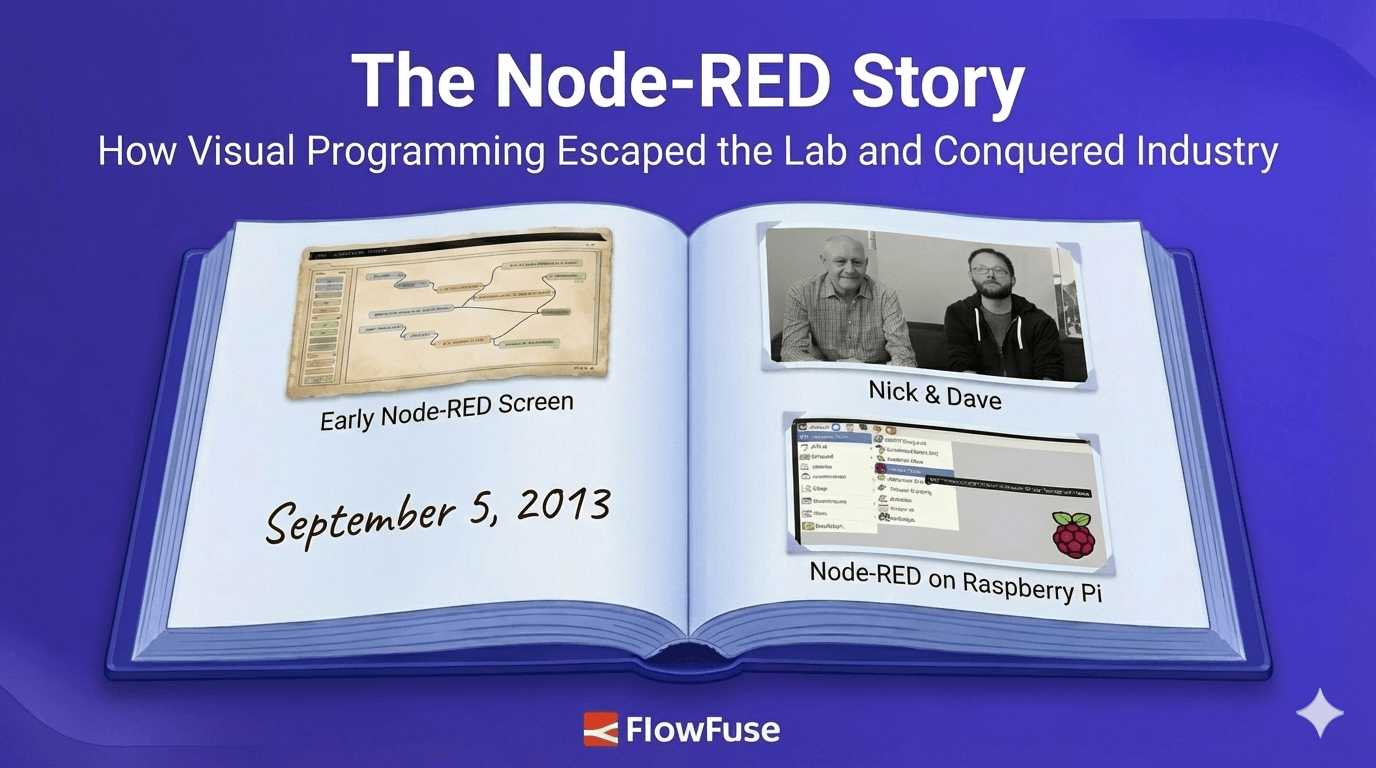
The Node-RED Story: How Visual Programming Escaped the Lab and Conquered Industry
In late 2011, Nick O'Leary was a "plumber" of the digital age. As part of IBM's Emerging Technology Group, he spent his days building experimental projects that pushed the boundaries of what connected systems could do. But there was a problem: for every new experiment, he found himself writing the same boilerplate code over and over — the tedious "wiring" work needed to make different systems talk to each other.
-
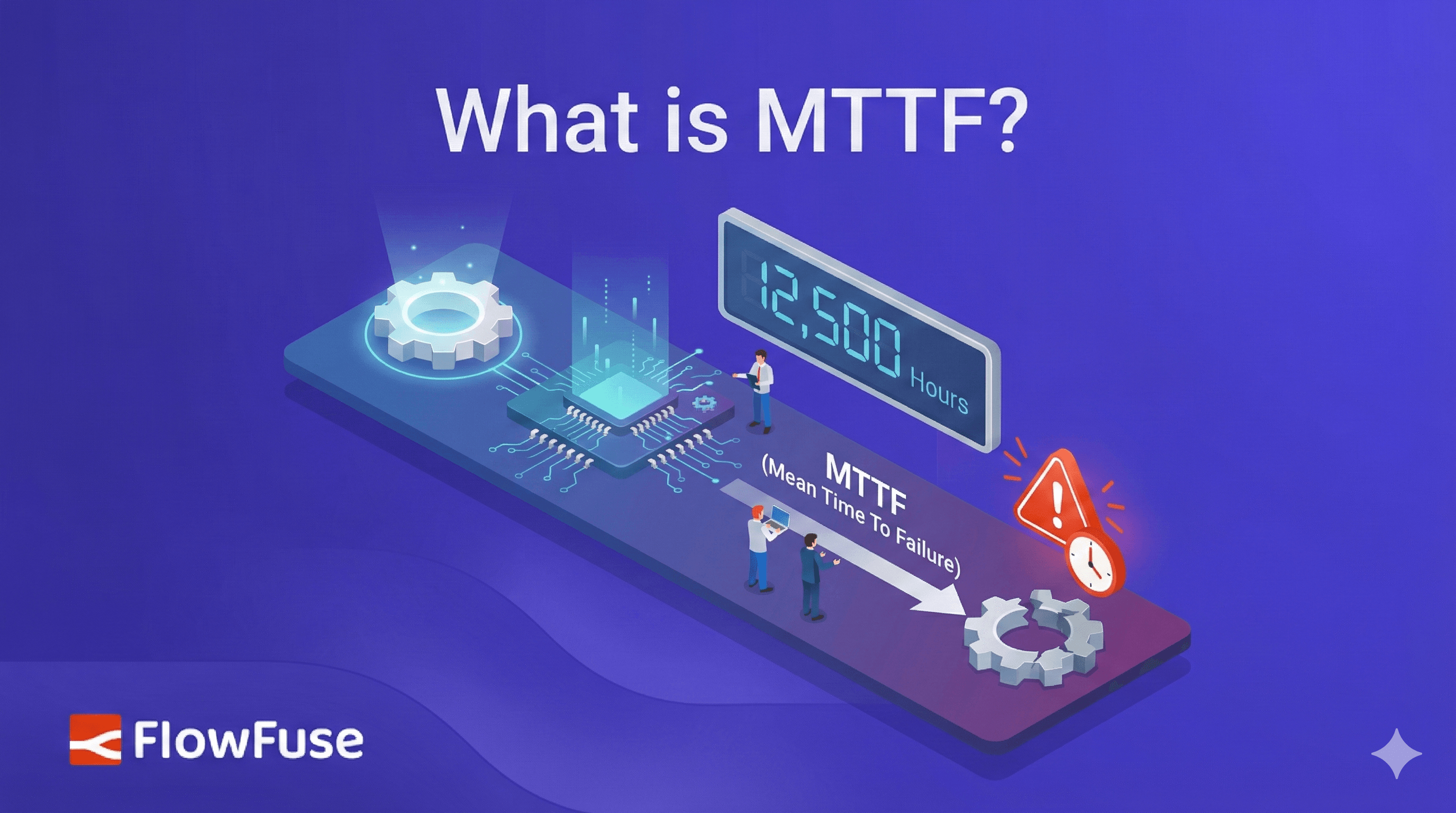
Mean Time to Failure (MTTF): Formula, Calculation, MTTF vs MTBF vs MTTR, and More
When a critical motor bearing assembly fails after just 6 months—half its rated lifespan—maintenance teams face a fundamental question: "How long should this component actually last?"
-
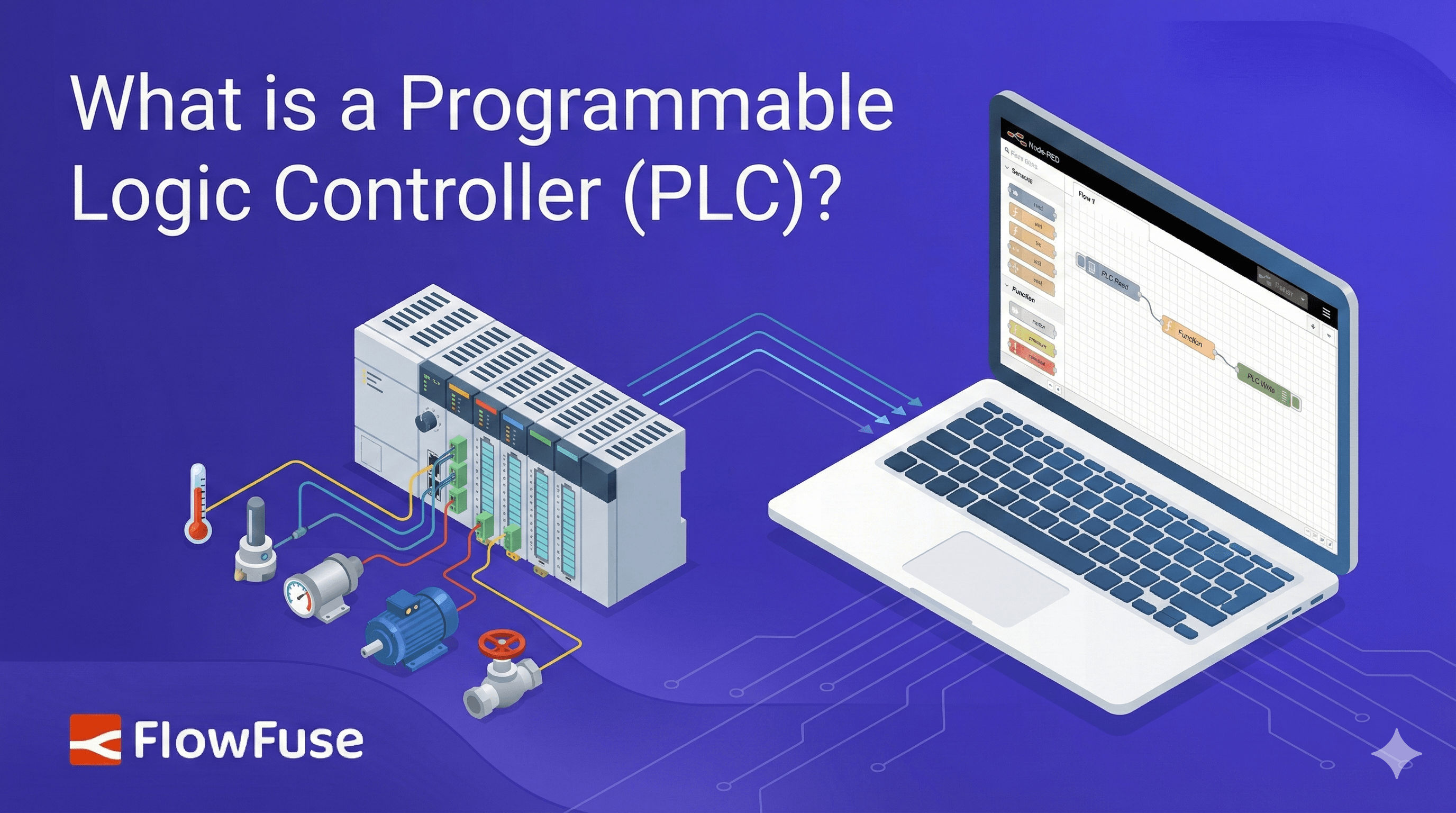
What Is a PLC (Programmable Logic Controller)? What It Does, How It Works, and Where It’s Used
A PLC (Programmable Logic Controller) is an industrial computer that continuously monitors sensors, executes control logic, and operates motors, valves, and equipment in real-time, serving as the reliable backbone of modern manufacturing and industrial automation.
-
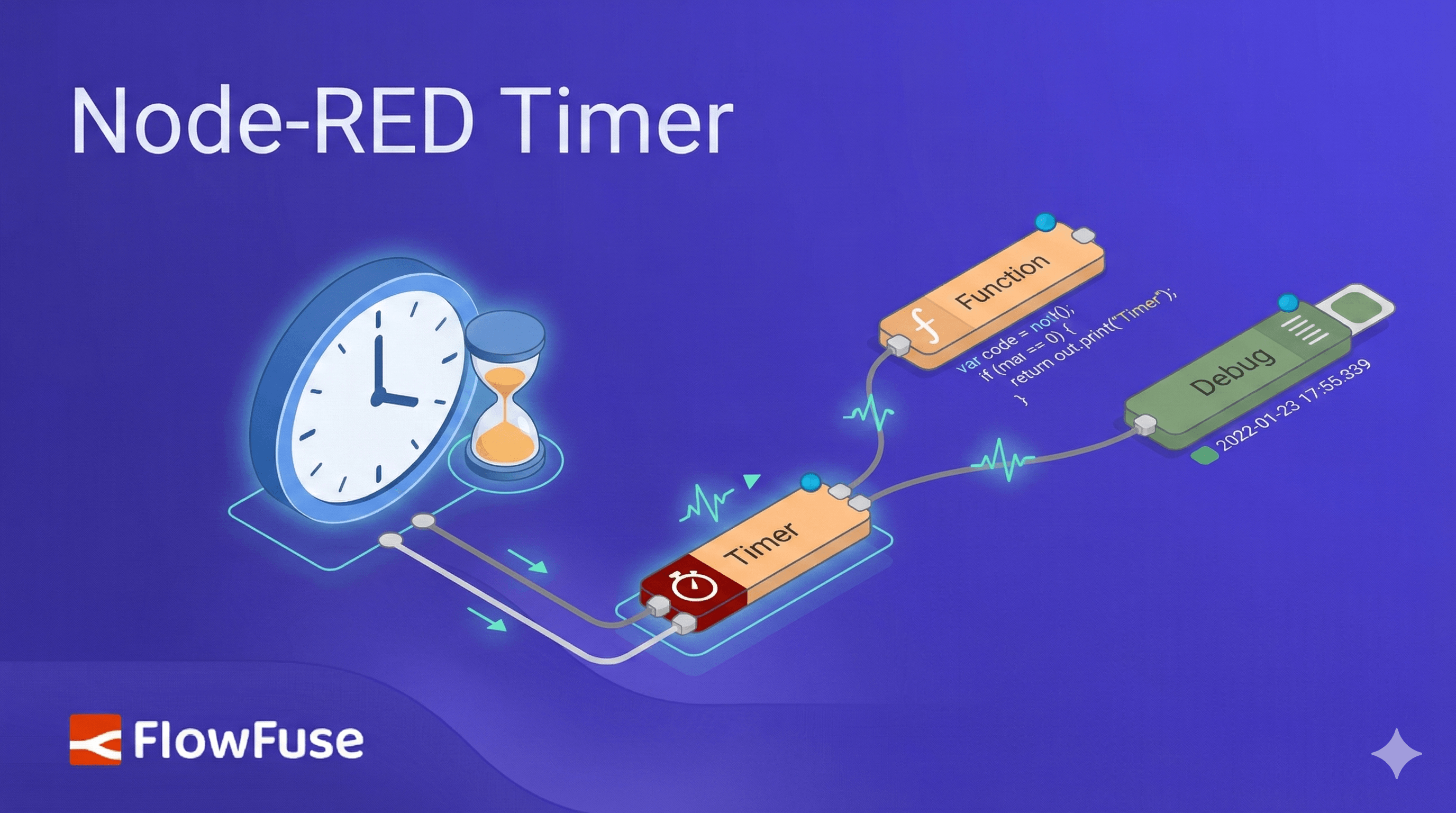
Node-RED Timer Tutorial: Create Stopwatch and Countdown Timers
Timers are everywhere in industrial automation. You need them to track how long a machine has been running, measure downtime, schedule maintenance, or coordinate processes that happen in sequence.
-
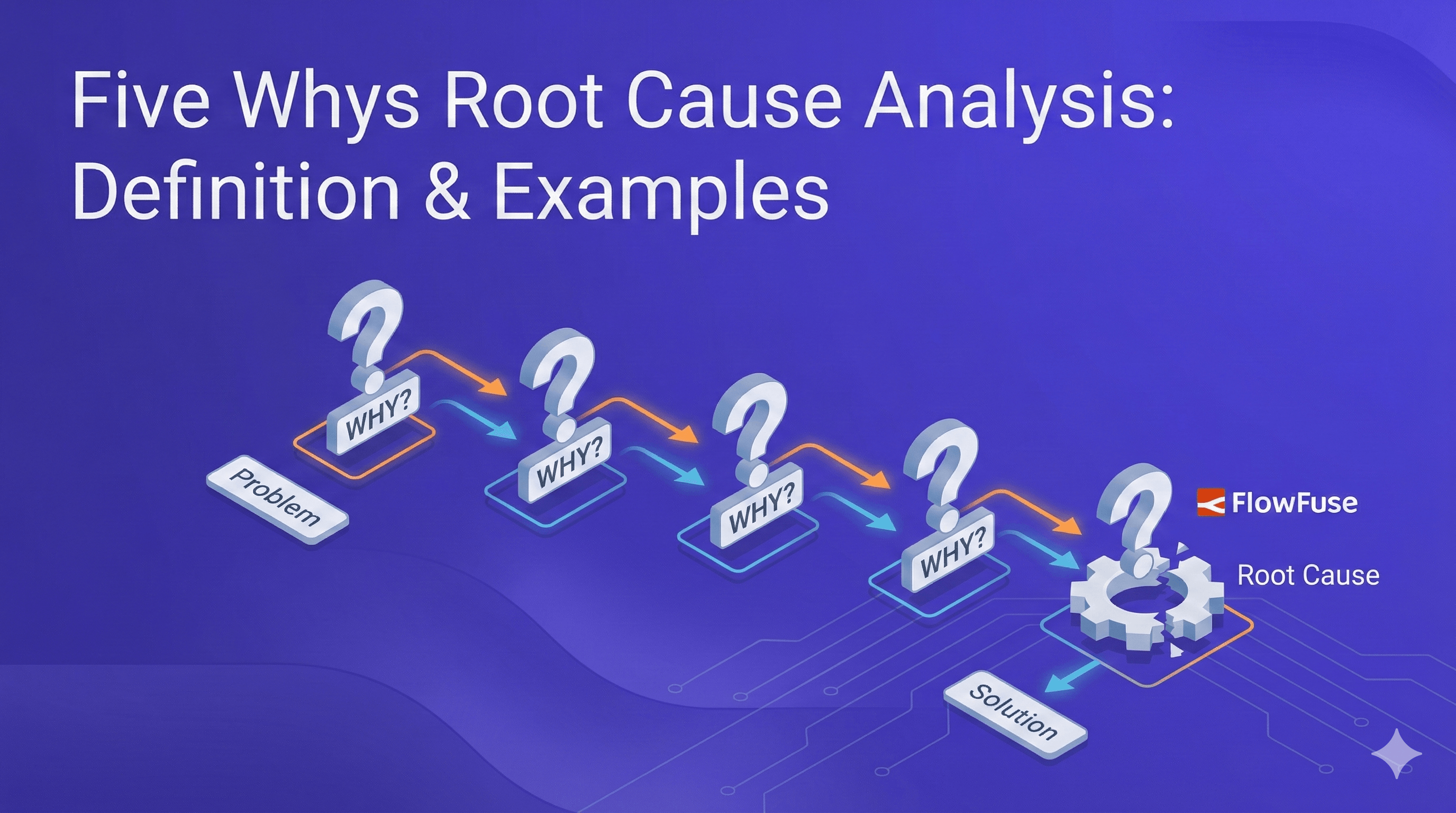
Five Whys Root Cause Analysis: Definition, Steps & Examples (2026)
The Five Whys is a root cause analysis technique where you ask "why" repeatedly—typically five times—until you identify the underlying systemic cause instead of just symptoms.
-
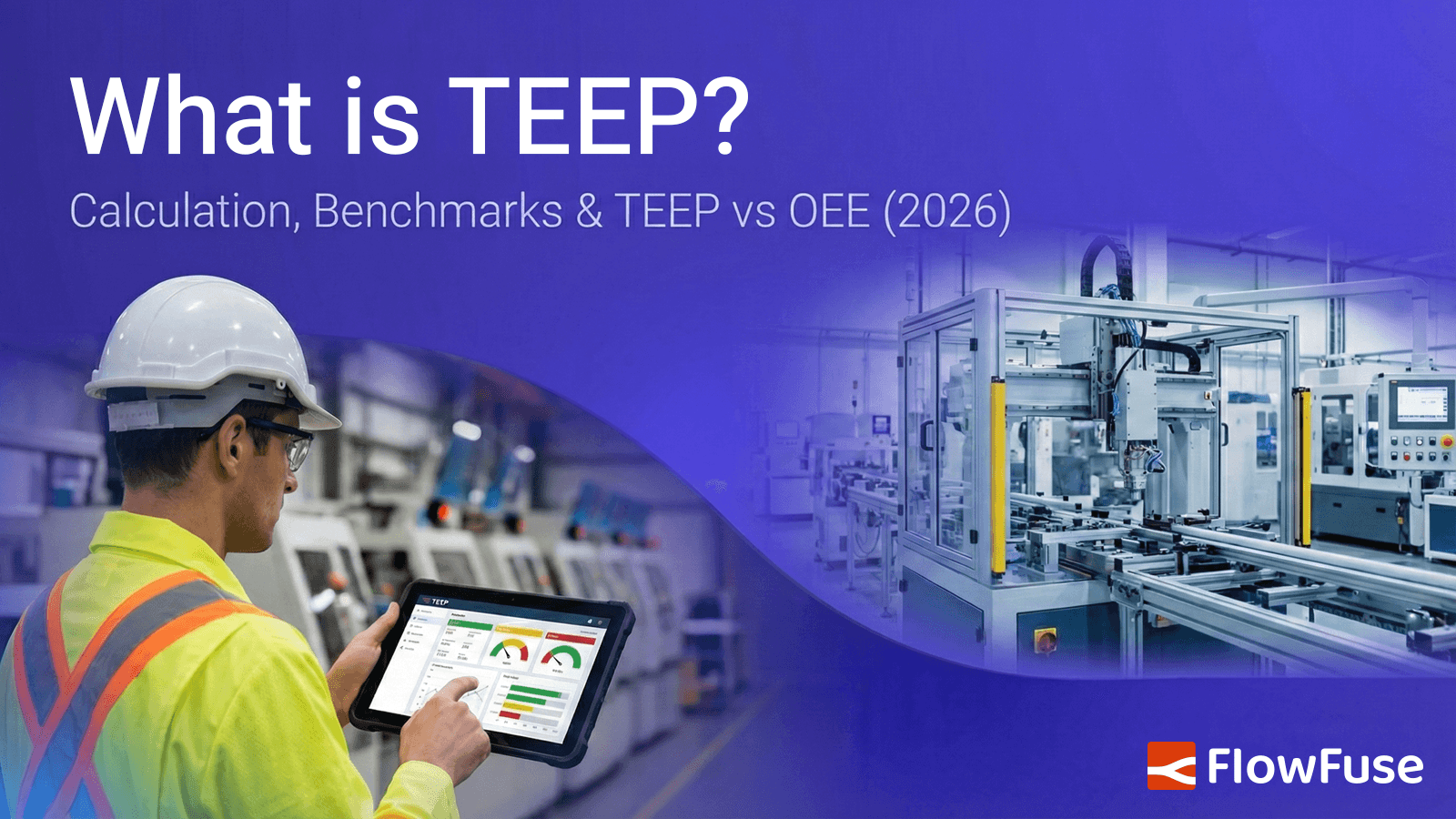
What is TEEP? Calculation, Benchmarks & TEEP vs OEE (2026)
Total Effective Equipment Performance (TEEP) is a manufacturing KPI used to understand how much of an equipment investment is actually being utilized. While most manufacturers rely on Overall Equipment Effectiveness (OEE) to assess shop-floor performance, years of real-world use have revealed a critical blind spot: OEE only measures how well equipment runs when it is scheduled to run. It says nothing about the many hours assets sit idle due to planning decisions, demand patterns, labor availability, or maintenance strategy.
-

FlowFuse 2.25: Interacting with MCP Resources in FlowFuse Expert, Improved Update Scheduling, and lots of UI improvements!
This release comes with some big updates for the FlowFuse Expert.
-

MQTT vs Kafka: Complete Comparison Guide 2026
Building IoT systems means making hard choices about how messages flow through your infrastructure. Apache Kafka and MQTT couldn't be more different in their approaches. MQTT came from the world of sensors and resource-constrained devices. Kafka was designed to push massive data streams between backend systems. Getting this choice right early determines whether your architecture scales smoothly or hits a wall.
-

Node-RED Buffer Parser Guide: Decode Modbus and Industrial Device Data
Legacy industrial devices communicate in bytes. Your temperature sensor doesn't send you
{"temp": 23.5}- it sends you[1, 3, 4, 1, 44, 0, 200, 190, 125]. Those numbers are meaningless unless you know how to decode them. -
Building a Weather Dashboard in Node-RED (2026)
A weather dashboard is honestly the best first project if you're getting into Node-RED. Takes about 10-15 minutes from start to finish, and by the end you'll understand how the whole thing works - connecting to APIs, processing data, and displaying it visually.
-
How to Access Optimized Data Blocks in TIA Portal (S7-1200/1500)
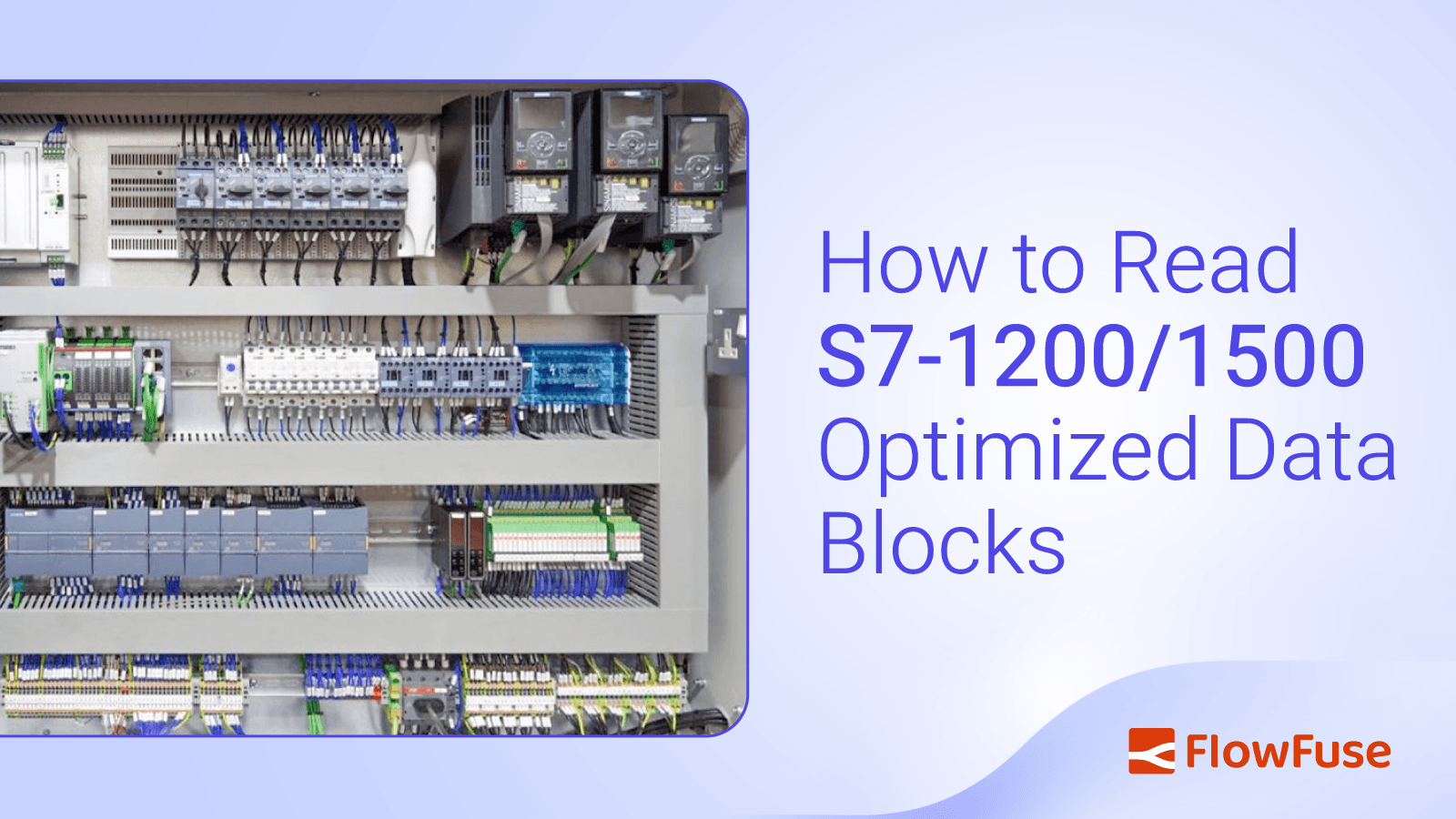
When working with Siemens S7-1200 and S7-1500 PLCs, you’ll notice that TIA Portal creates optimized data blocks by default. Unlike the classic S7-300/400 controllers, optimized blocks do not use fixed memory offsets. Instead, the PLC compiler reorganizes the data internally for better performance and memory efficiency. This architectural change often creates confusion when trying to read PLC data from external systems.
-

How to Optimize Industrial Data Communication with Protocol Buffers
You're generating terabytes of sensor data every day. Most of it is waste, I mean..
Not the measurements—those are fine. It's the packaging. Text formats wrap every reading in field names, quotes, and brackets. You're moving more formatting characters than actual data across your network.
-
How to Protect Your Factory From Bad Data: A Must-Have Read for IIoT
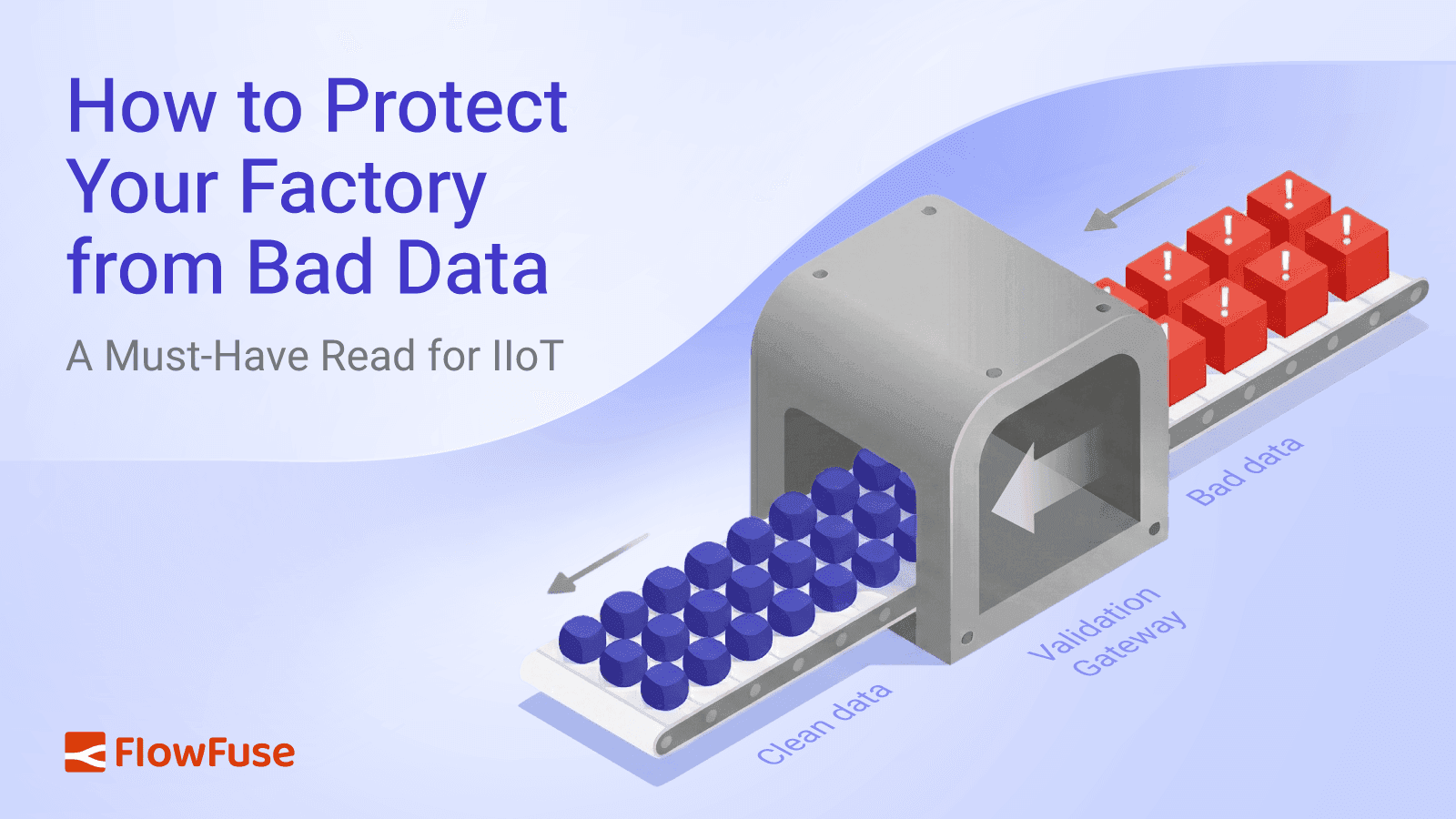
Bad data quietly corrupts production analytics, triggers false equipment alarms, and causes automation systems to make faulty control decisions. Unlike system crashes, these issues go unnoticed until they've already propagated through your operations—affecting multiple processes and causing unexpected shutdowns or production anomalies.
-
Store-and-Forward at the Edge: Buffering Production Data During Network Outages
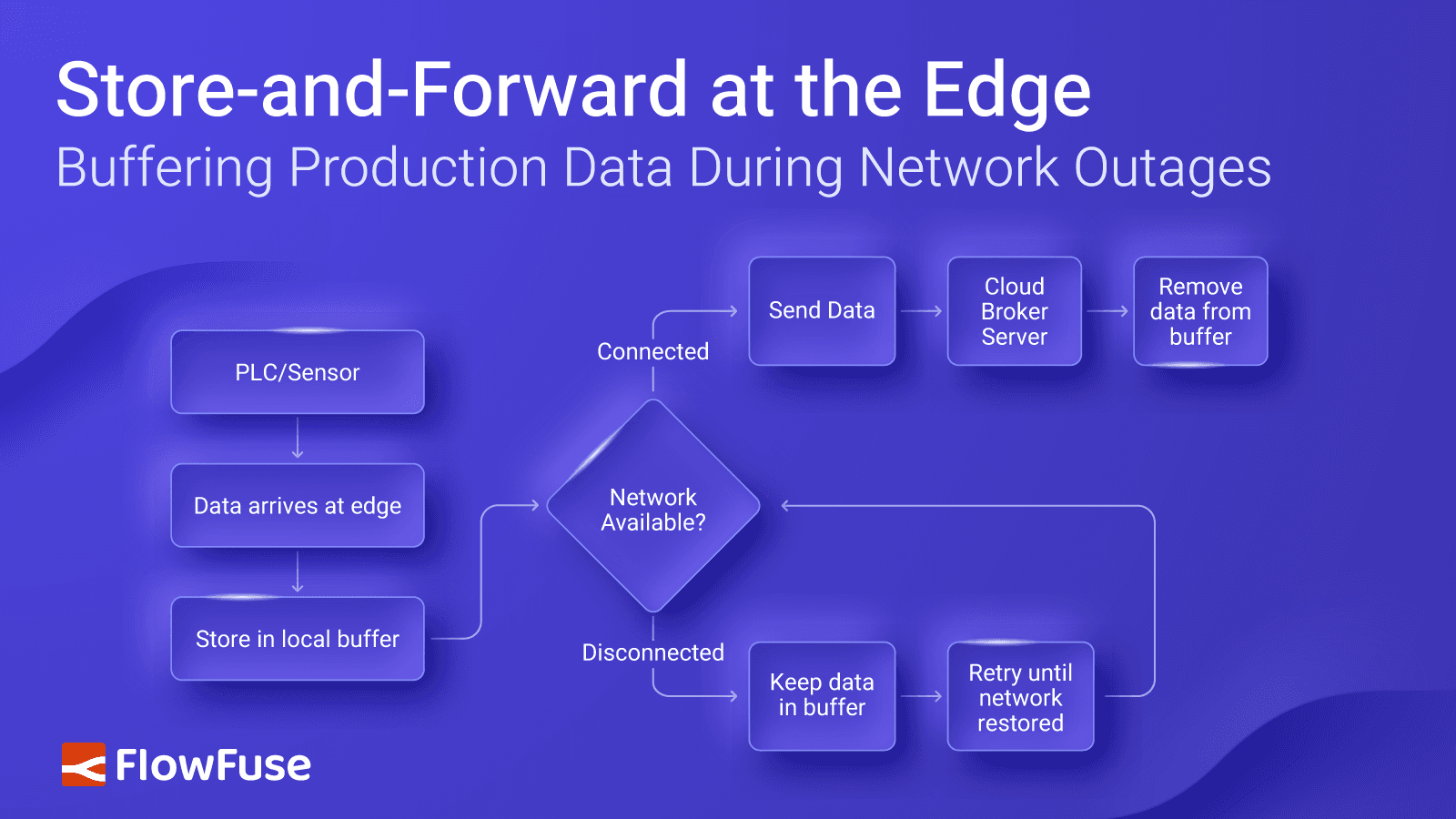
Network outages happen. A fiber cut, a switch failure, or infrastructure maintenance can take your connectivity offline without warning. When it does, your PLCs continue operating normally—they don't wait for the network to recover.
-
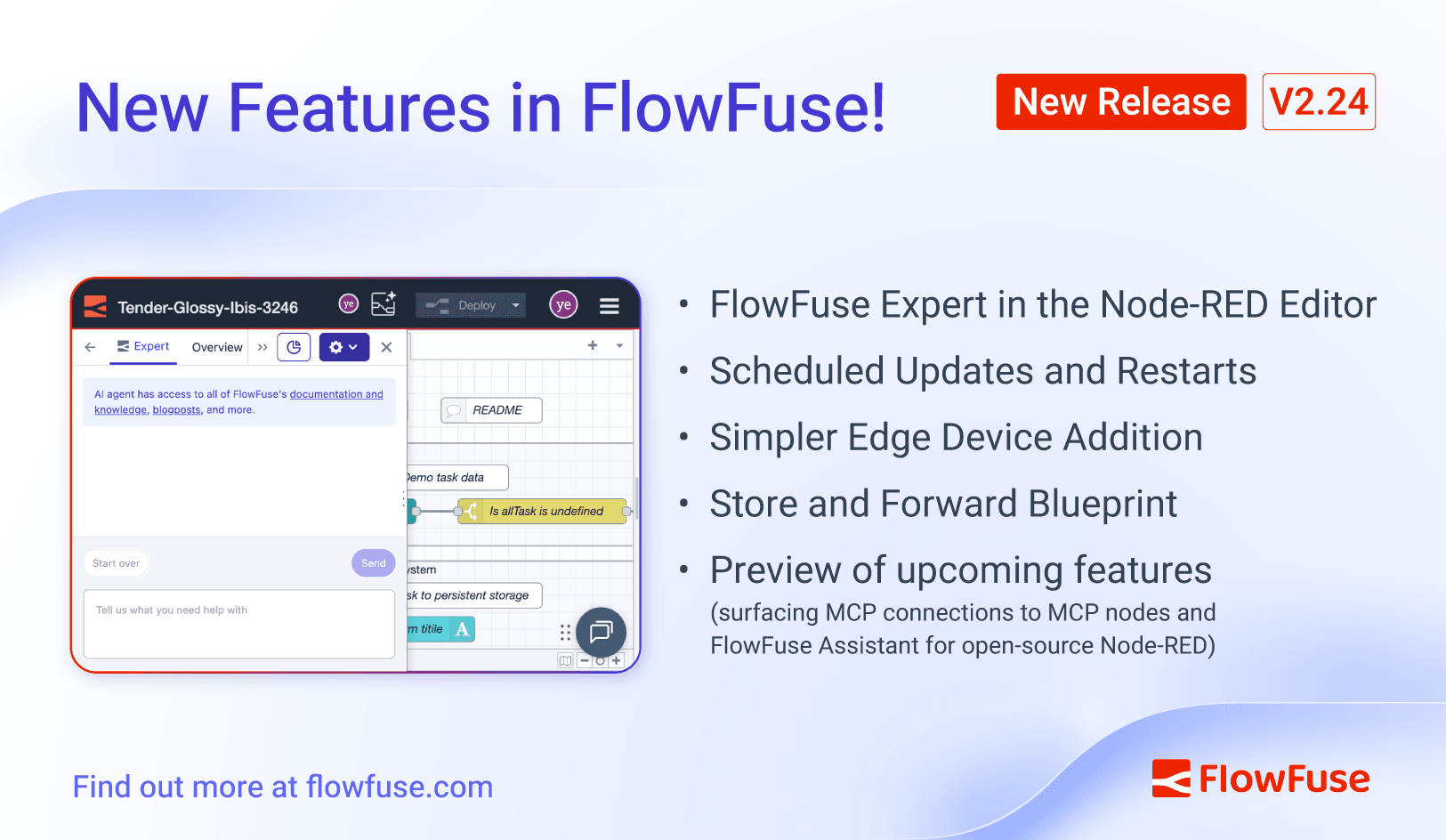
FlowFuse 2.24: FlowFuse Expert in the Node-RED Editor, Scheduled Updates, Simpler Edge Device Addition, Store and Forward Blueprint, and what's next!
This release unlocks several new abilities for our users, speeding your development time, easing management of Node-RED instances, providing a smoother path to adding large numbers of devices, and more. Let's dig in.