Blog
-
FlowFuse 2.4: making it easier to work with Snapshots, Blueprints & Devices
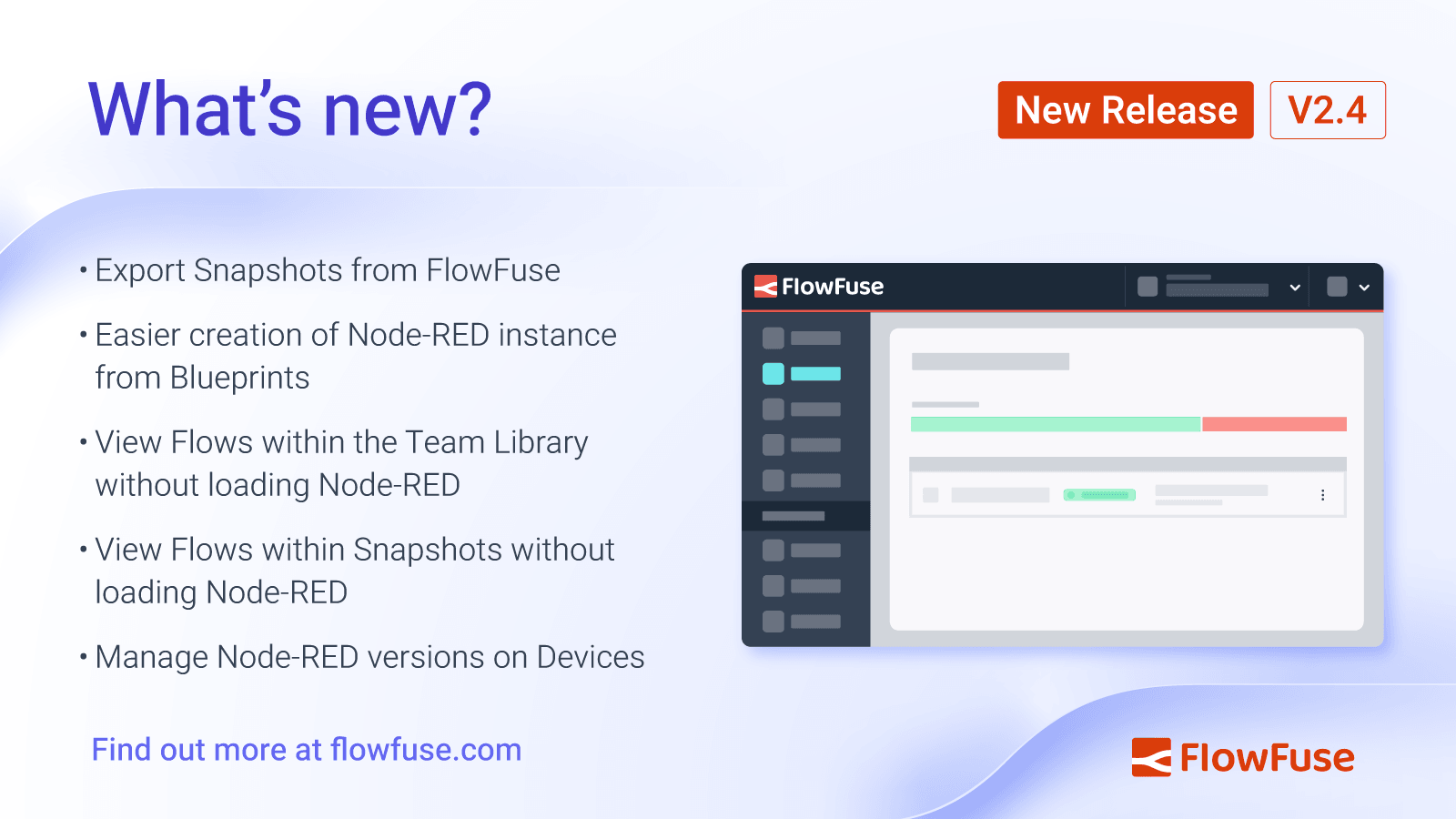
FlowFuse 2.4 introduces better ways to work with Snapshots, Blueprints, view the content of you flows in FlowFuse, and manage the version of Node-RED running on Devices
read more... -

Node-RED Variables: Global, Flow, Context & Environment Variables Complete Guide
Variables are essential for building anything beyond basic message routing in Node-RED. They let you store state, share data across your application, and manage configuration—capabilities you'll need for almost any real-world project.
-
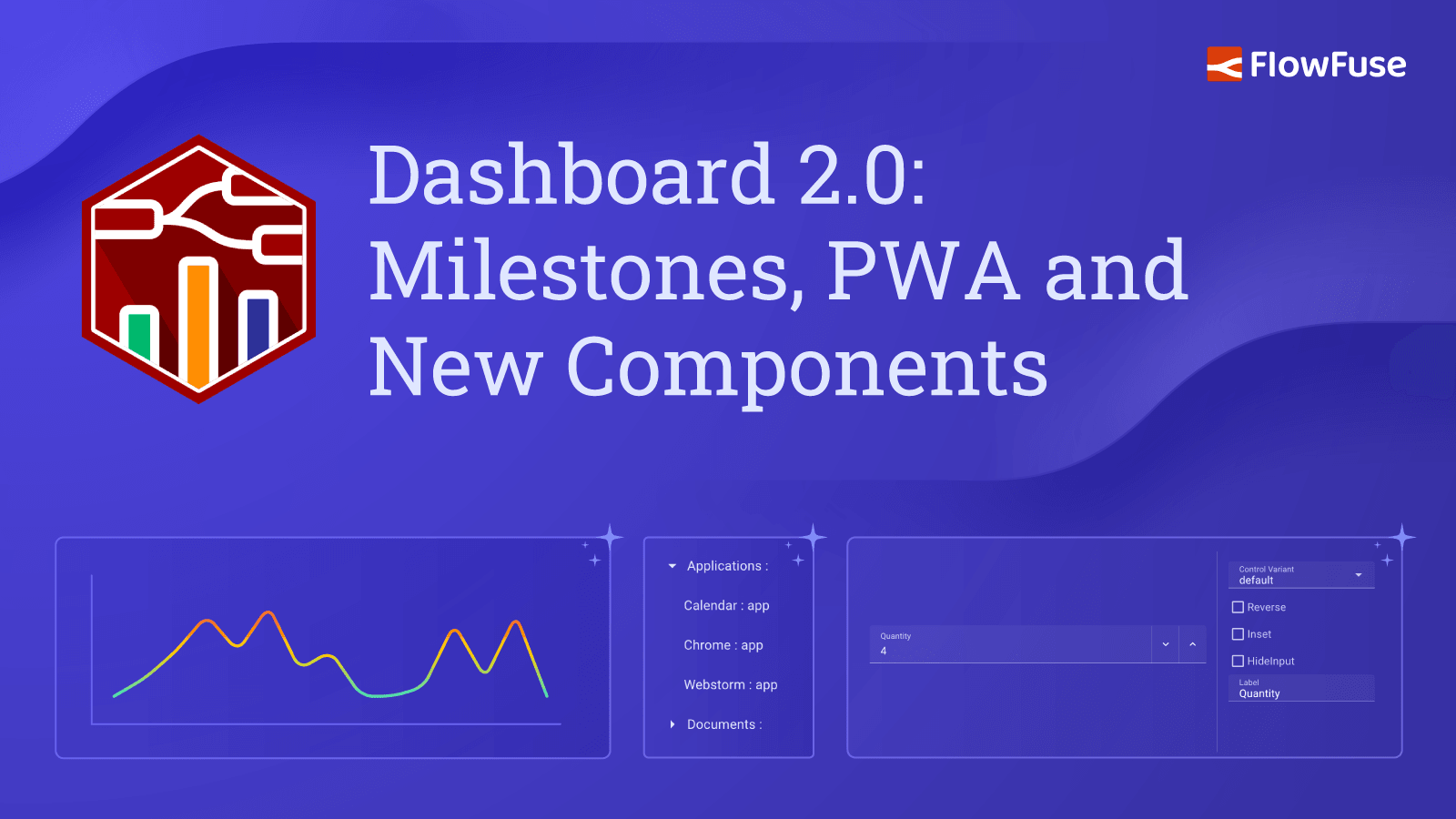
Dashboard 2.0: Milestones, PWA and New Components
With a new release of Node-RED Dashboard 2.0 we have plenty of new fixes and improvements being added to the project. In this post, we'll deep dive into community contributions, PWA support, new Vuetify components, and the rest of the great work published in this latest release.
-

How to Build An Application With Node-RED Dashboard 2.0
In this guide, we'll build a Todo application to guide you through the features and explain how you can build rich and dynamic applications too. It shows many of the features that make Dashboard 2.0 great, and why you should use it over the deprecated node-red-dashboard.
-
Introducing FlowFuse Dedicated
Today, we are excited to officially announce FlowFuse Dedicated, a new way to use our enterprise platform as a single-tenant SaaS offering. This new offering provides all of the benefits of FlowFuse enterprise, with an added focus on data residency, isolation, and private networking to meet compliance needs.
-

FlowFuse Gears Up for Hannover Messe
We're excited to announce that FlowFuse will be exhibiting at the upcoming Hannover Messe! This renowned industrial trade fair provides a platform to connect with global innovators and explore the latest advancements. Visit us in Hall 14, Stand L59 from April 22nd - 26th.
Do you need a pass? We can help with that as well.
-
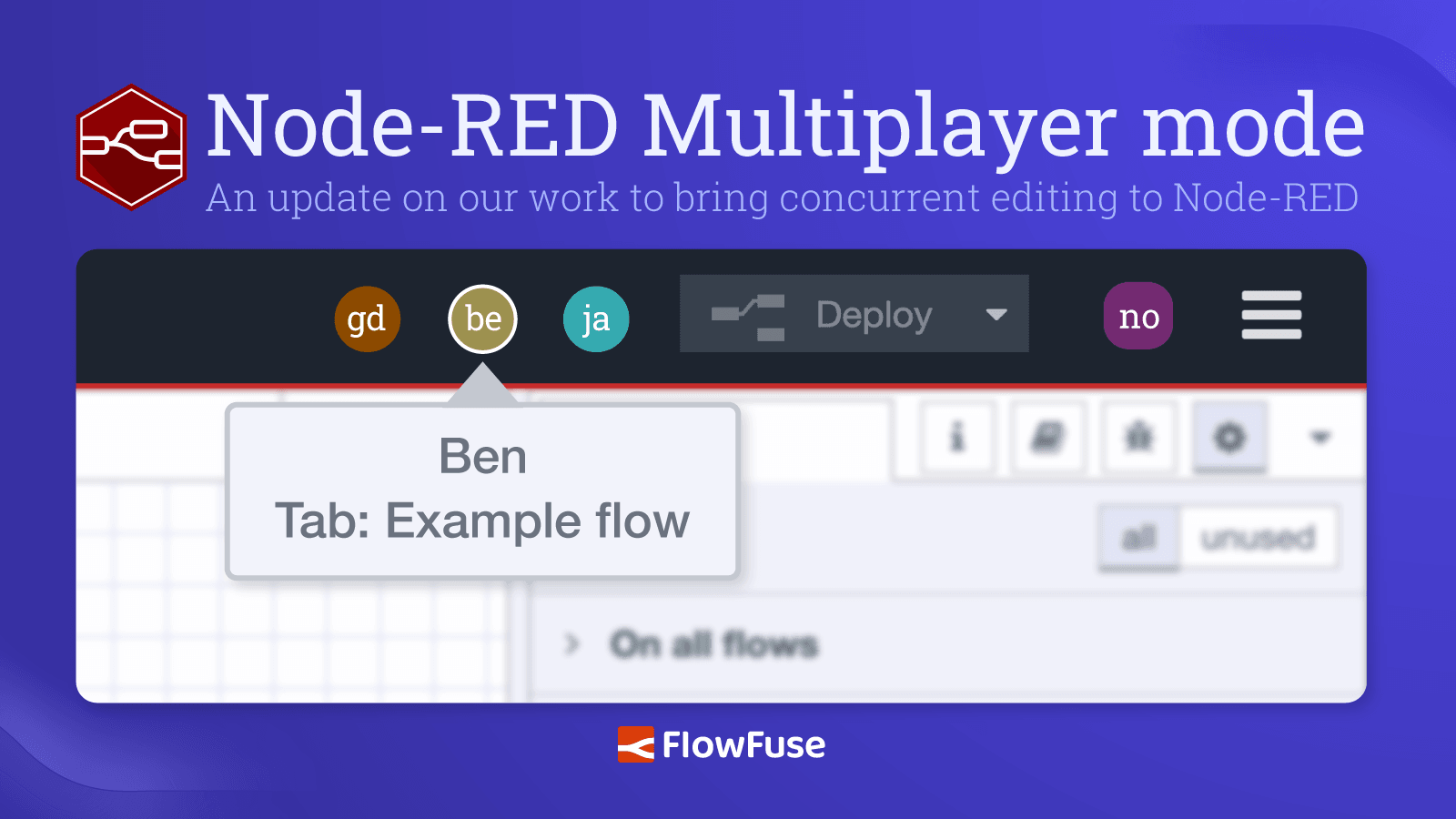
Node-RED Multiplayer mode
Last month I wrote about what users can expect with Node-RED 4.0. One of the features I highlighted was improving the concurrent editing experience. With the recent beta release of Node-RED, the first steps on that journey are now available to try.
In this post, I'll cover what has been done so far and what we've got planned.
-
How to Build an Admin Dashboard with Node-RED Dashboard 2.0
Managing and analyzing increasing amounts of data becomes crucial for organizations. Dashboard 2.0 and Node-RED help organizations access the data, normalize it, and visualize it. But what about controlling who can access what data? That's where an admin-only page comes in. Now With Node-RED Dashboard 2.0, we can also create robust and secure admin-only pages easily. In this guide, we'll provide you with step-by-step instructions to Build an Admin-only page with Node-RED Dashboard 2.0.
-
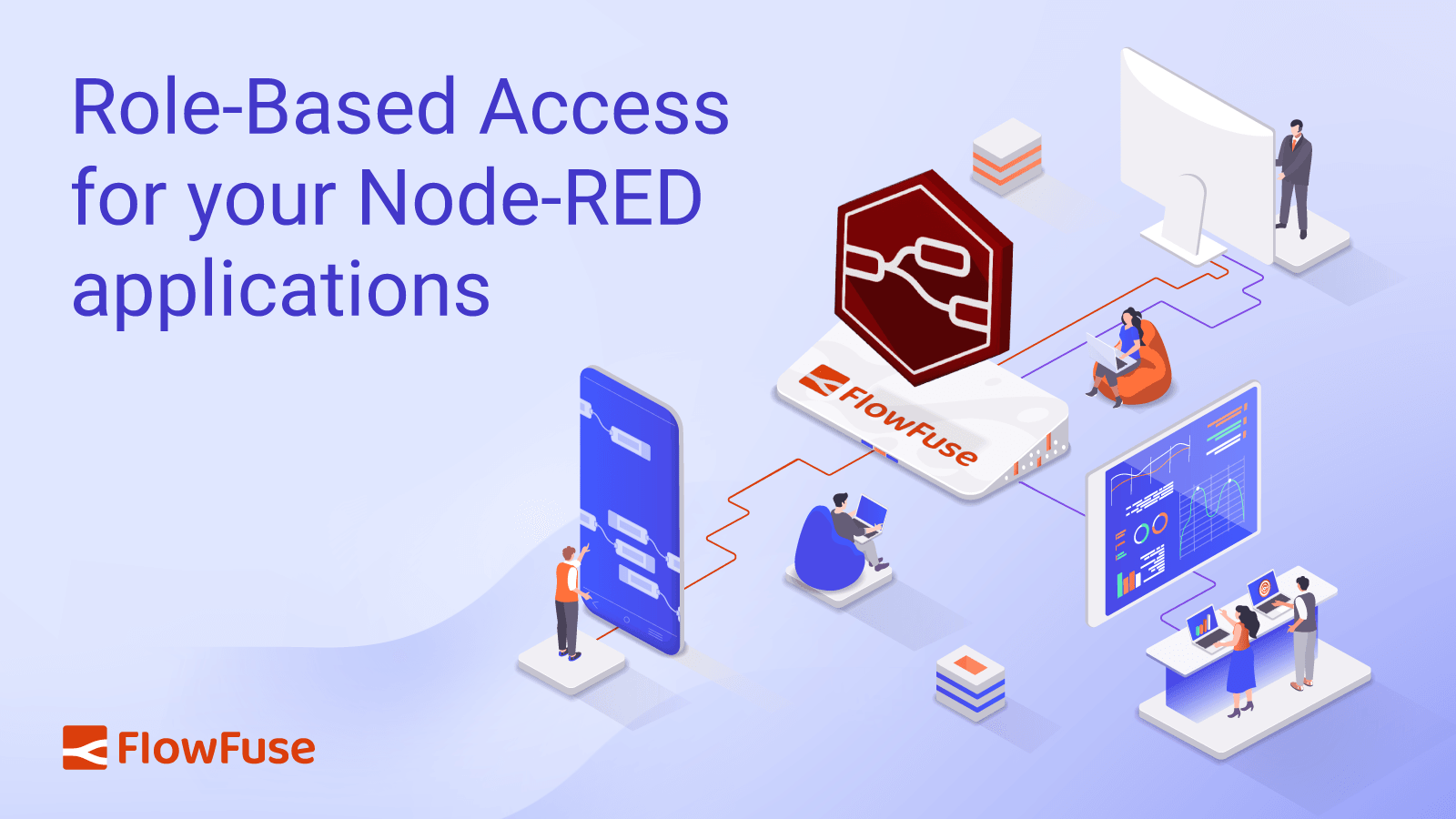
Role-Based Access for your Node-RED applications
Role-based access Control (RBAC) is a crucial component of modern software platforms. It provides granular control over access rights and enhances security. Integrating RBAC into the FlowFuse platform brings this level of sophistication to Node-RED, allowing users to manage their environments with precision and confidence. This blog will explore how FlowFuse's RBAC system improves both security and user experience within the Node-RED ecosystem.
-
Displaying logged in user on Node-RED Dashboard 2.0
About a month ago, a powerful solution became available to the Node-RED community to deal with users and allow multiple to interact with the same dashboard in a personalized manner. It's called the Multli user Dashboard for Node-RED. In this guide, we will provide a step-by-step guide to show you how to secure your dashboard and access and display logged in user information on Dashboard 2.0.
-
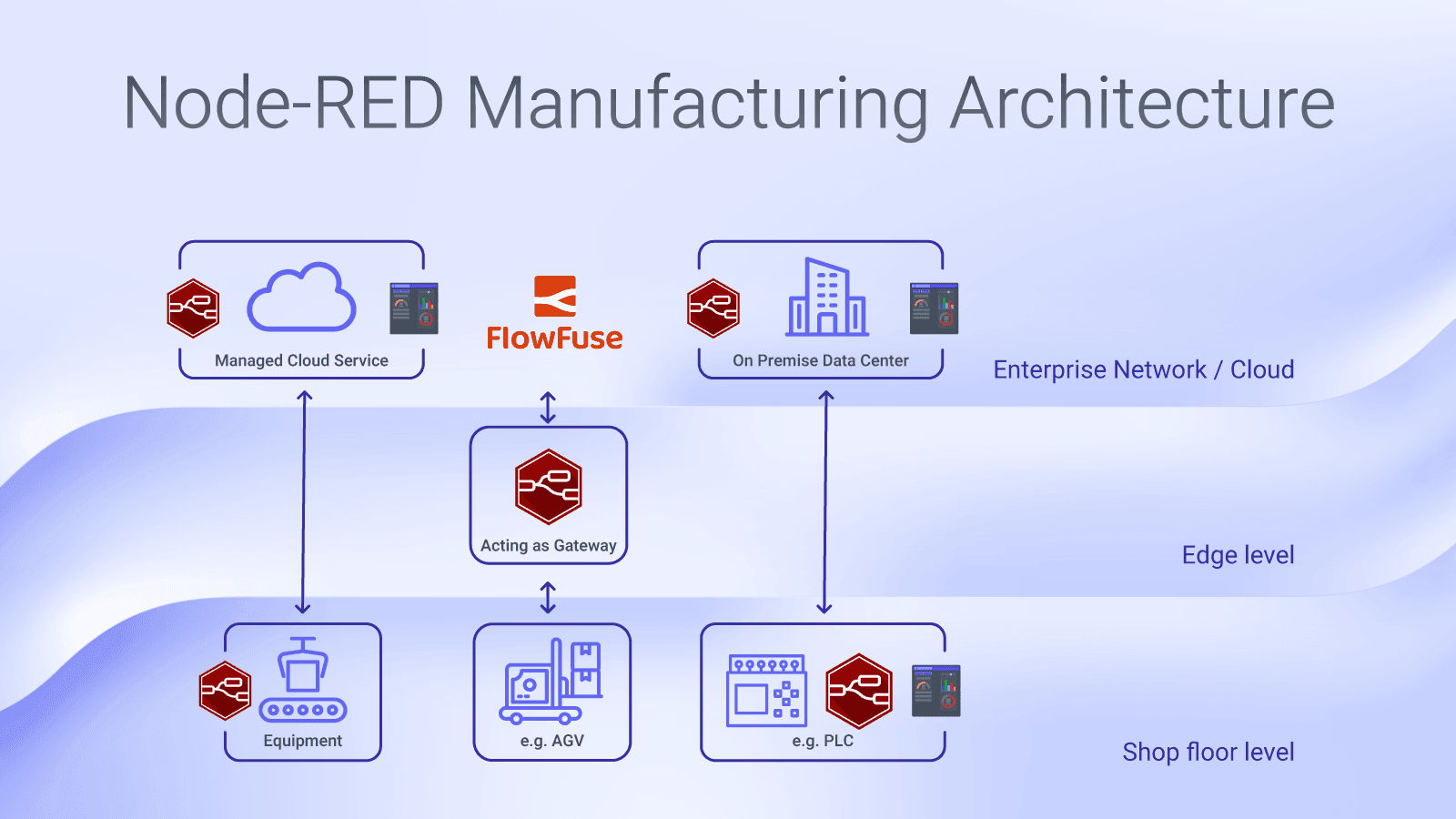
Node-RED Manufacturing Architecture
The architecture of a factory's Node-RED infrastructure is a common topic of discussion and inquiry. Fundamentally, my response to such queries unfolds in two parts. Initially, the focus must be on data organization. I champion a structure centered around a Unified Namespace, a concept I explore in depth in this article "Node-RED in a Unified Namespace Architecture." However, this is only one part of the inquiry. The other part of the question delves into the positioning of FlowFuse and Node-RED within the network infrastructure.
-
Using Kafka with Node-RED
Kafka is one of the most powerful technologies enabling seamless data communication. Many individuals are utilizing it alongside Node-RED for real-time data exchange in their IoT and IIoT applications. However, some users are encountering difficulties in obtaining assistance with Kafka-related queries.
-

FlowFuse and Gallarus Announce Strategic Partnership to Accelerate Industry 4.0 Adoption
FlowFuse, a leading provider of the low-code end-to-end development platform for industrial applications, and Gallarus Industry Solutions Limited, the leading industry 4.0 integrator in Europe dedicated to digital transformation through the deployment of the Unified Namespace (UNS) digital architecture, today announced an exciting strategic partnership. This collaboration aims to empower businesses with advanced solutions for Industry 4.0 transformation and optimized operational efficiency.
-
Getting Started with Node-RED Dashboard 2.0
With our latest release of Node-RED Dashboard 2.0, we've made some big improvements to the onboarding experience.
We're seeing over 2,000 people download Dashboard 2.0 per week, and are seeing a great buzz in the community of brand new Node-RED users, experienced Node-RED users that haven't explored a UI solution previously and existing users migrating from Dashboard 1.0.
So, with that in mind, we wanted to offer a new "Getting Started" guide that will help you get up and running with building custom user interfaces and data visualizations in Node-RED.
-
Securing HTTP Traffic for Node-RED with FlowFuse
Citizen development empowers employees to create digital solutions. However, it requires guardrails to ensure data security, operational stability, and compliance. These guardrails are what FlowFuse provides to the Node-RED community to level up their deployments. FlowFuse offers many different security measures for authentication and authorization, which all apply to different scenarios.
In this post we’ll take a look at most of them, specifically for HTTP traffic. We’ll discuss the trade-offs for auditabliltiy, convenience to use as either machine or human, among other factors.
-
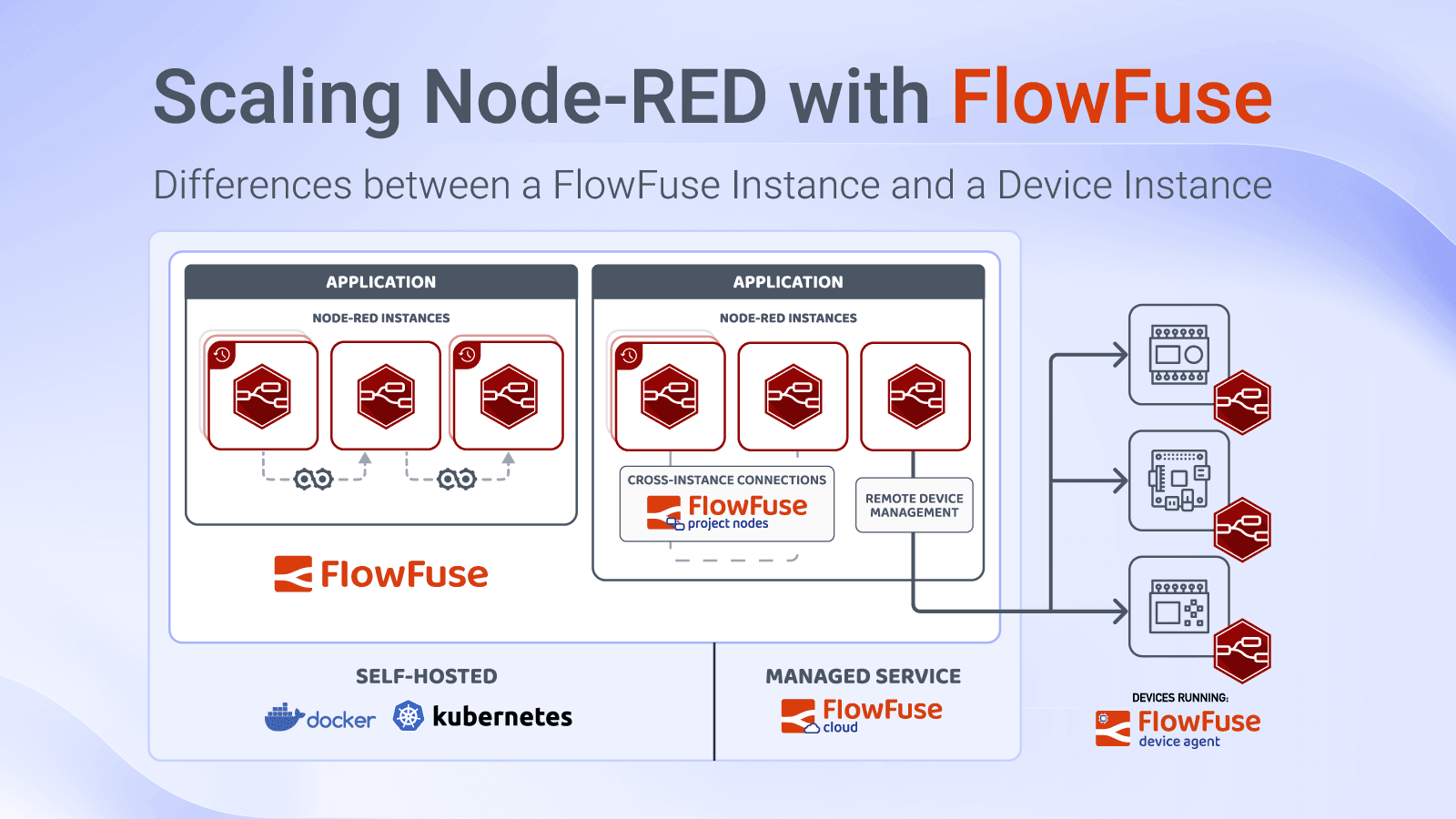
Scaling Node-RED with FlowFuse: Differences between a FlowFuse Instance and a Device Instance
FlowFuse is a Software as a Service (SaaS) platform designed to enhance the experience and capabilities of Node-RED for its users. By focusing on scalability, security, and Dev Ops, FlowFuse aims to remove some of the technical barriers associated with using Node-RED, making it easier for citizen developers to automate tasks, process data, and create applications. In this blog post, we will discuss the differences between a FlowFuse instance and a FlowFuse device instance while highlighting how FlowFuse addresses scalability challenges in Node-RED deployments.
-

How Kafka is applied in manufacturing
Have you ever wondered how manufacturing and automotive industries can effectively manage the vast amount of real-time data generated by sensors and systems throughout the production process? A few years back, these industries faced major obstacles in handling the large volume of real-time data produced by sensors placed across the production line. Even today many industries continue to grapple with similar challenges. Traditional data management systems struggle to process and analyze this data in real-time, leading to inefficiencies in operational activities and decision-making. To address these challenges, various manufacturing and automobile plants have embraced technologies like Apache Kafka.
-
FlowFuse Open Source Starter Tier Resource Limits
Today, with the latest FlowFuse release, an important change was made that updates the resource limits for our open-source, self-managed FlowFuse server tier. This change does not affect FlowFuse Cloud users in any way.
-
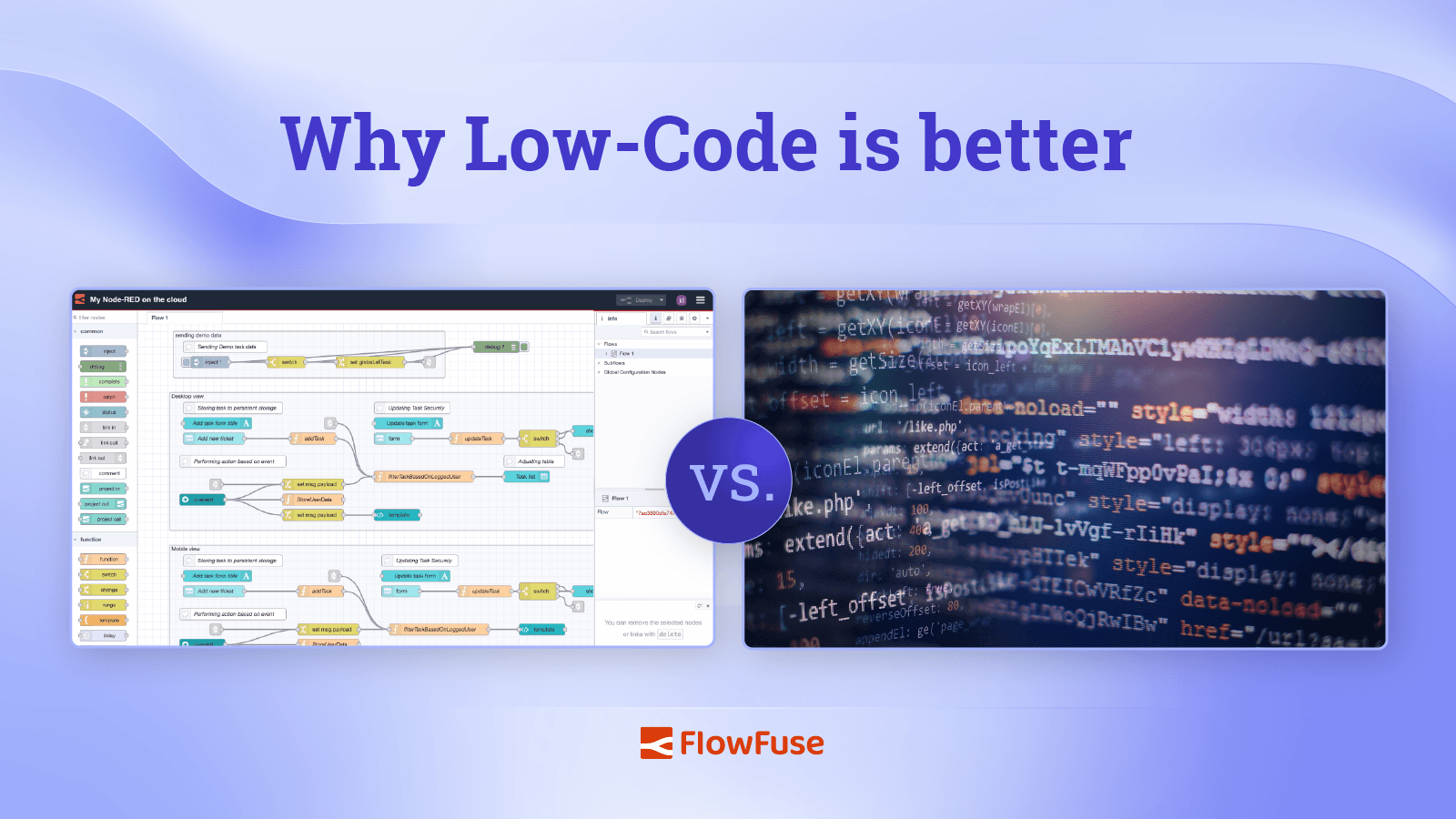
Why Low-Code is Better
There are two common reasons why new languages come about. They provide a feature missing in the existing programming languages, or it is a tool that is easier to learn and use. The latter often functions like a swiss army knife with each iteration including more and more tools. The journey of low-code is like a swiss army knife, the perfect tool for the Citizen Developer.