Blog
-
How to Ingest CSV Logs into MQTT, Databases, and Dashboards
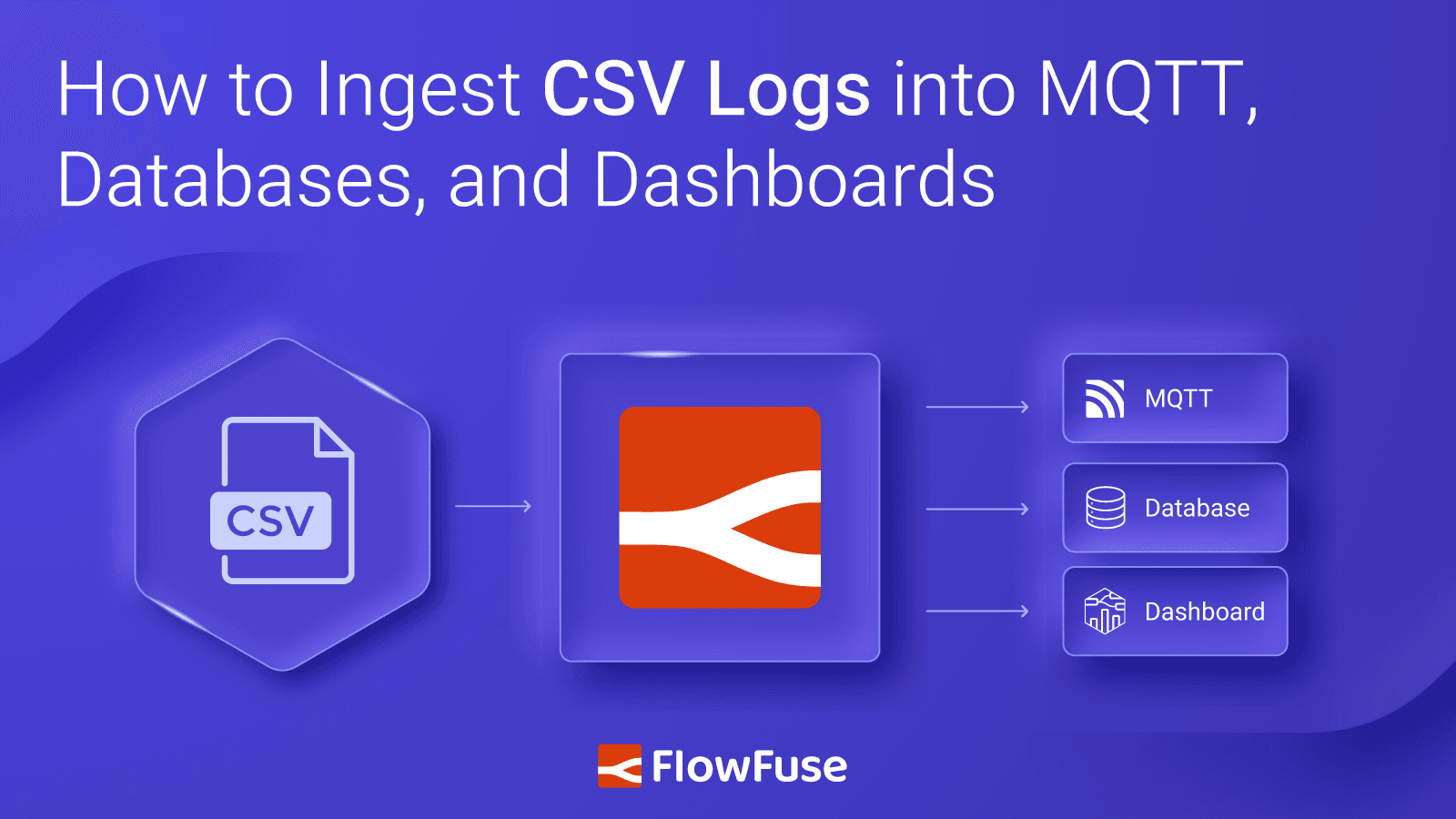
If you work in manufacturing, you likely have gigabytes of data in CSV files—temperature logs, production counts, machine status records. The data exists and is organized, but it's not accessible to the systems that need it.
read more... -

The Industrial IoT Market Shift: What the PTC Divestment Means for Your Data Strategy
The news of PTC selling Kepware and ThingWorx to TPG for $600 million has caused a significant impact across the industrial automation sector. For anyone working in manufacturing, OT data integration, or industrial IoT, this divestment raises important questions about the future direction of these widely-used platforms, and what it means for organizations relying on them.
-
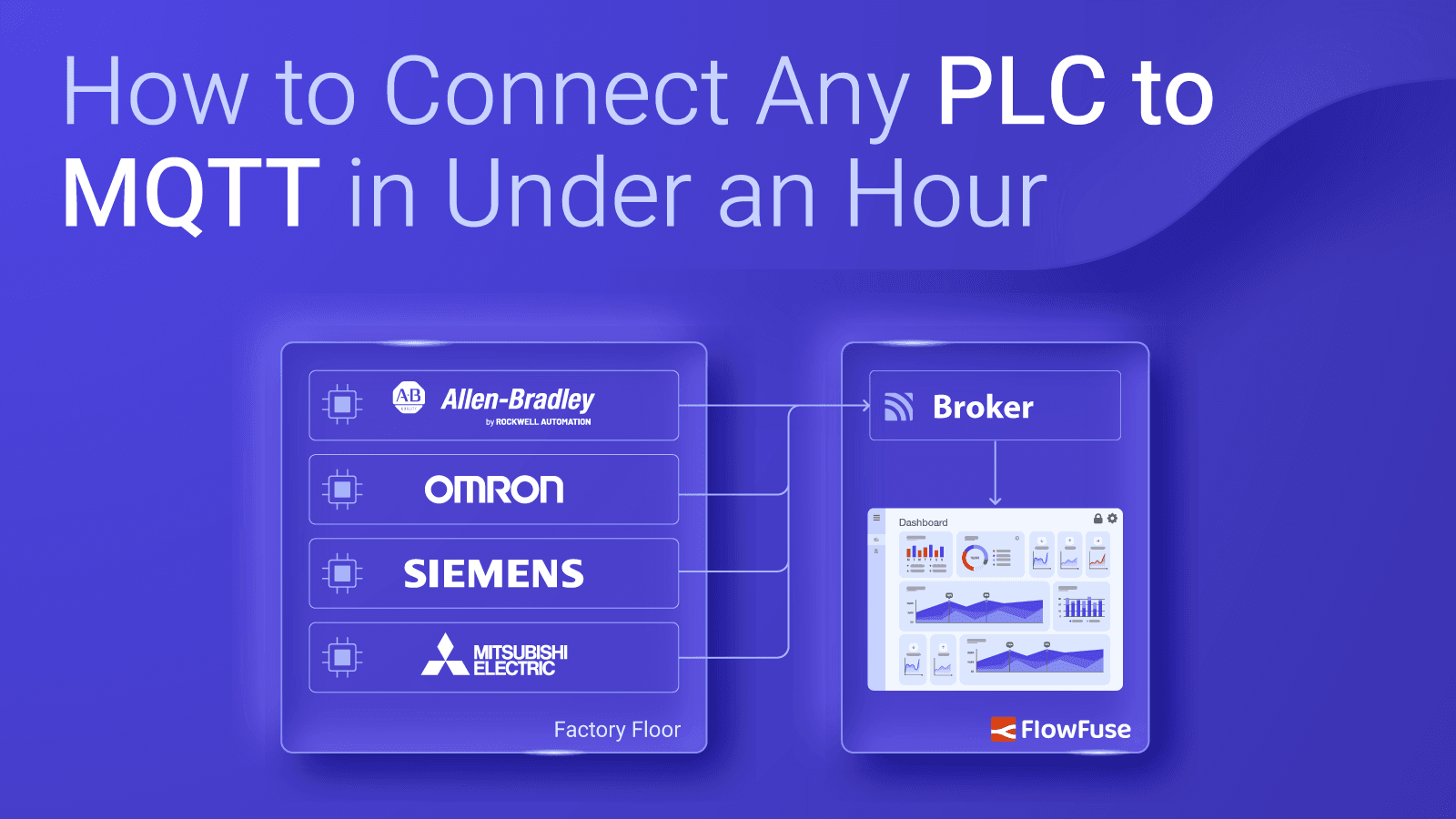
How to Connect Any PLC to MQTT in Under an Hour
Getting PLC data into systems where it can be monitored, analyzed, and acted upon is essential for modern manufacturing. MQTT has become the standard for moving this data. It's lightweight, handles unreliable networks well, and excels at real-time streaming. Once your PLC data is published to MQTT, it creates a common pipeline that IT systems understand—flowing easily to cloud platforms, analytics tools, dashboards, and eliminating protocol translation headaches.
-
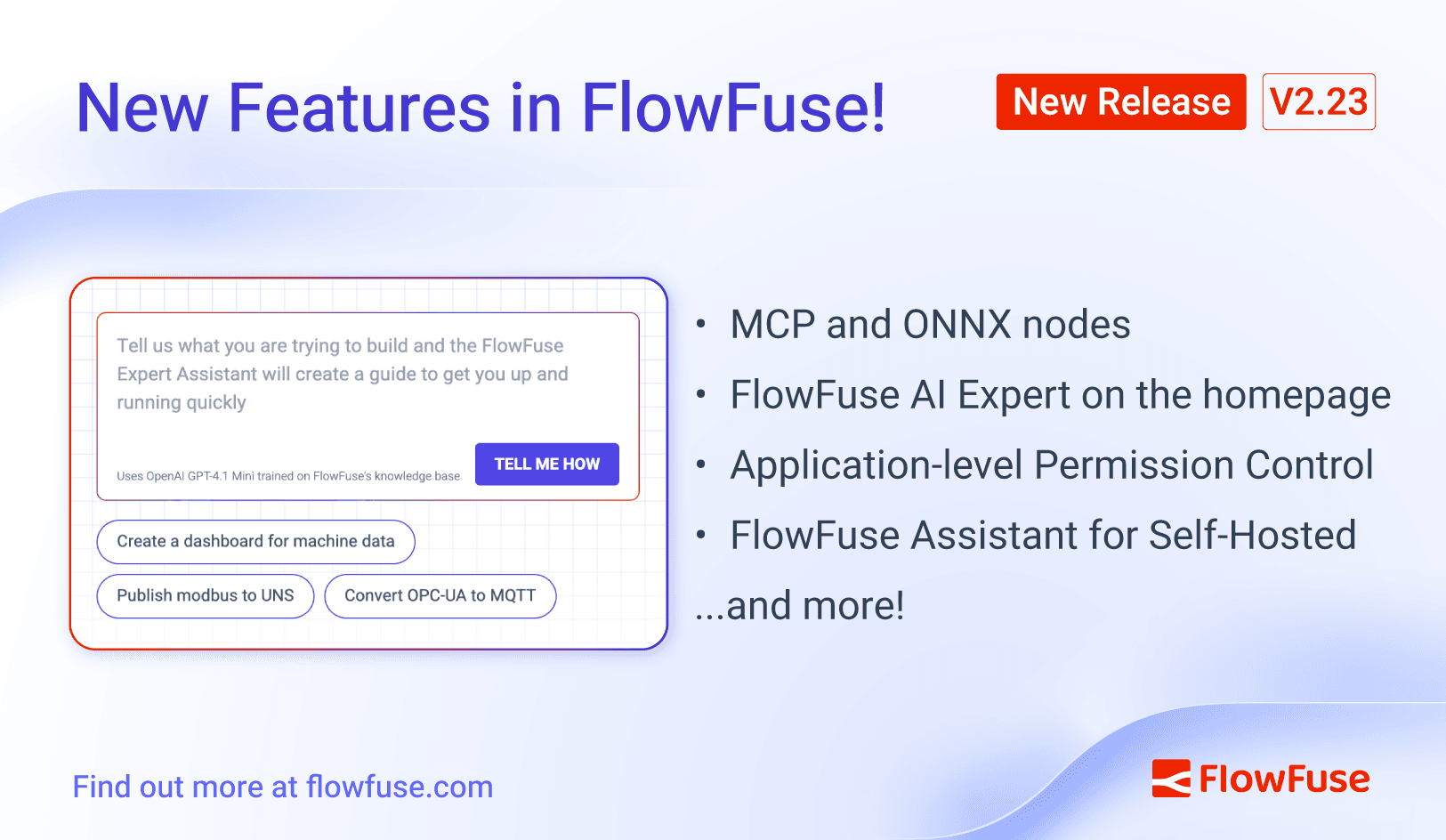
FlowFuse 2.23: MCP and ONNX nodes, FlowFuse AI Expert on the homepage, Application-level Permission Control, FlowFuse Expert for Self-Hosted, and more!
In this exciting release, we've shipped several features that accelerate development in Node-RED using AI, enable creation of AI agents using new Model Context Protocol nodes, provide application-level access controls for much more sophisticated user permissions management, and put an expert flow creator right on our homepage. It's a big one! Let's have a look.
-
How to Log PLC Data to CSV Files
CSV files have been recording manufacturing data since the mid-1980s, over 40 years of continuous use across every industry. Logging to databases like InfluxDB, TimescaleDB, or PostgreSQL is excellent for real-time analytics, complex queries, and large-scale operations. But many organizations still rely on CSV files for good reasons: regulatory compliance, legacy system integration, offline analysis, or simply because it's the format their teams know and trust. If you're reading this, you're likely one of them and need a reliable solution.
-

Introducing FlowFuse Expert
We've had an exciting week launching MCP and ONNX nodes, and now we’ve added something else we're really excited about: FlowFuse Expert. It helps you build flows by providing a step-by-step recipe to build an application in FlowFuse and Node-RED, in plain language.
Oh, and it was created by and is running on FlowFuse technology! Take a look:
-
Building MCP Servers for AI Agent Integration in Node-RED with FlowFuse
FlowFuse released MCP nodes for Node-RED, allowing AI to directly interact with the flows you have built. These nodes let AI read sensor data, query databases, and control equipment. You use FlowFuse to collect and manage data in your flows, while AI agents determines what actions to take and why, enabling intelligent monitoring and automated control of factory and IIoT/IoT systems.
-
MCP and Custom AI Models on FlowFuse!
We have a VERY exciting announcement today: you can now build an MCP server and upload custom-trained AI models to FlowFuse!
-
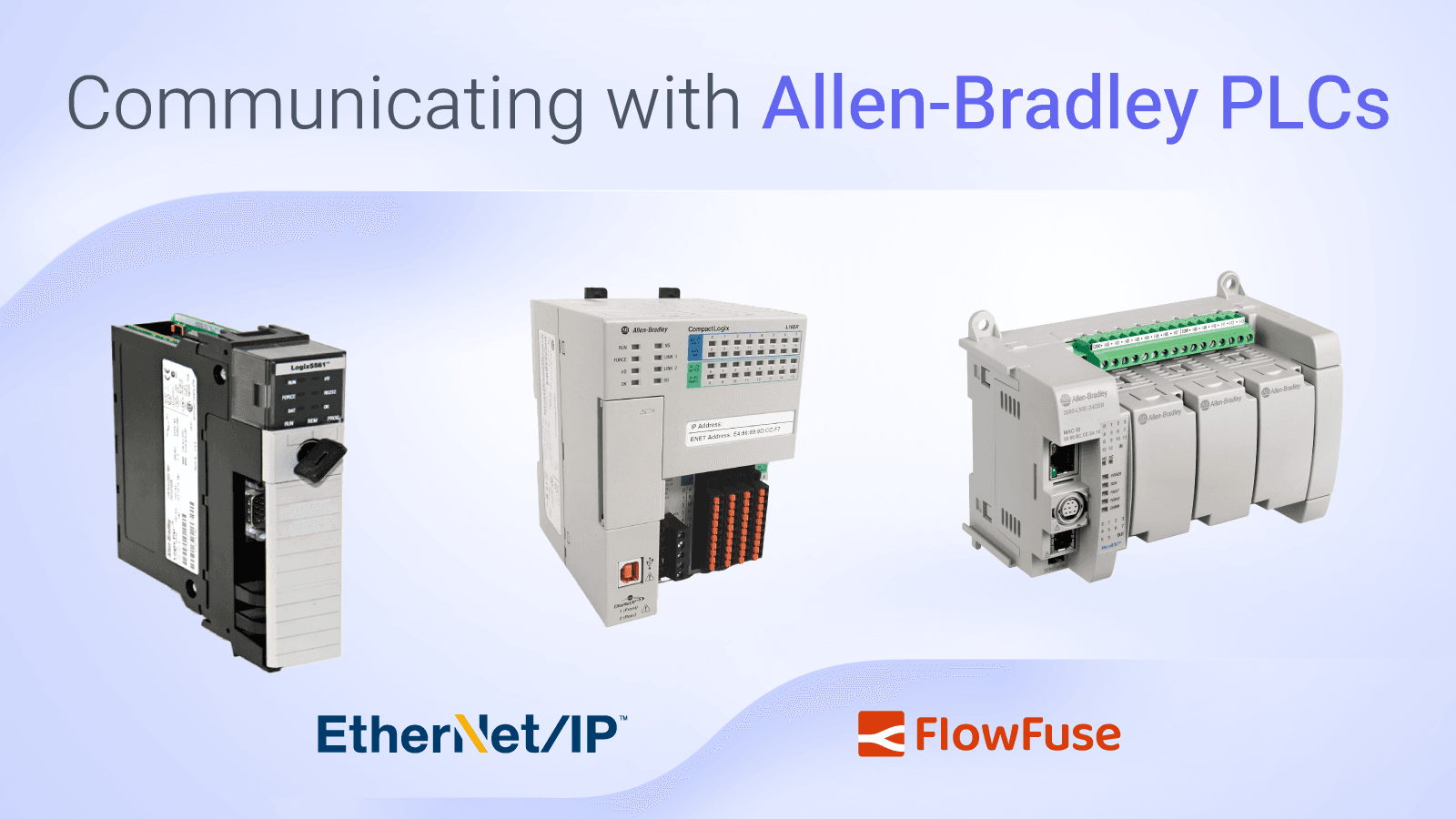
EtherNet/IP Integration with FlowFuse: Communicating with Allen-Bradley PLCs
EtherNet/IP is one of the most widely used industrial communication protocols for connecting PLCs, sensors, and controllers across manufacturing environments. If you're working with Allen-Bradley PLCs—whether it's ControlLogix, CompactLogix, or MicroLogix—you're using some of the most trusted automation hardware in the industry.
-
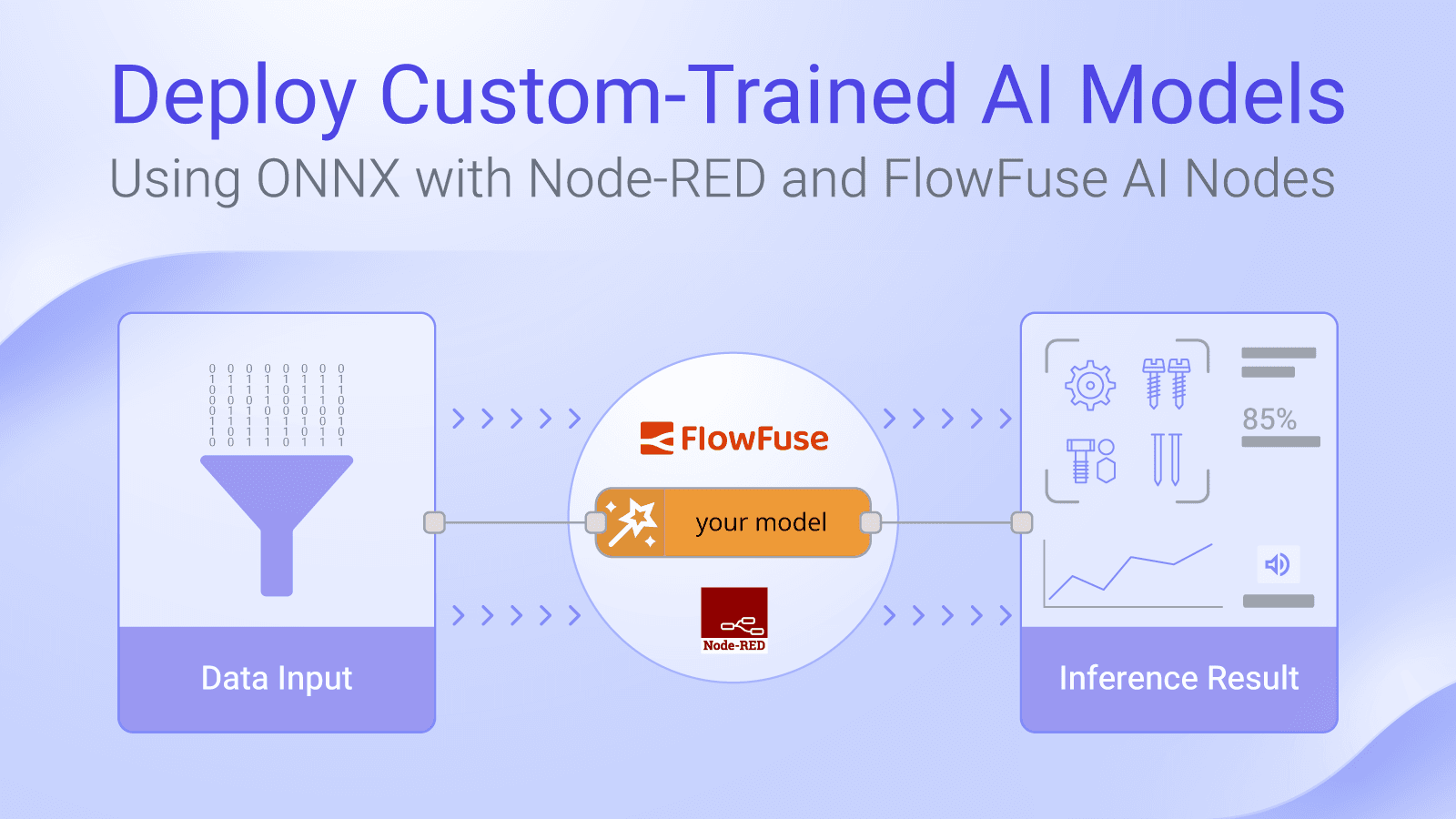
Deploy Custom-Trained AI Models: Using ONNX with Node-RED and FlowFuse
FlowFuse is introducing a new set of AI nodes to make it easier than ever to integrate AI and machine learning into your Node-RED workflows. In this guide, you will learn how to train an image classifier model, and use it with the new FlowFuse AI Nodes to recognise your own products, components - or anything else you can imagine.
-

Beyond Cloud AI Orchestration: Why the Future is Hybrid Edge-Cloud Intelligence
Congratulations to n8n on their Series C funding round! This is a fantastic milestone and a clear signal that the market has moved beyond AI experimentation and into the serious business of production deployment. Platforms like n8n are mastering what we call centralized orchestration: creating cloud-native "brains" that connect digital services, APIs, and data sources to execute complex workflows. This approach excels for digital-first applications and represents a crucial evolution in workflow automation.
But for industrial applications, we need to think beyond traditional cloud orchestration.
-
The Node-RED Revolution: How Low-Code is Democratizing Industrial Automation
To understand the impact Node-RED has had on industrial automation, it's useful to understand where it has come from and what has enabled its success.
-
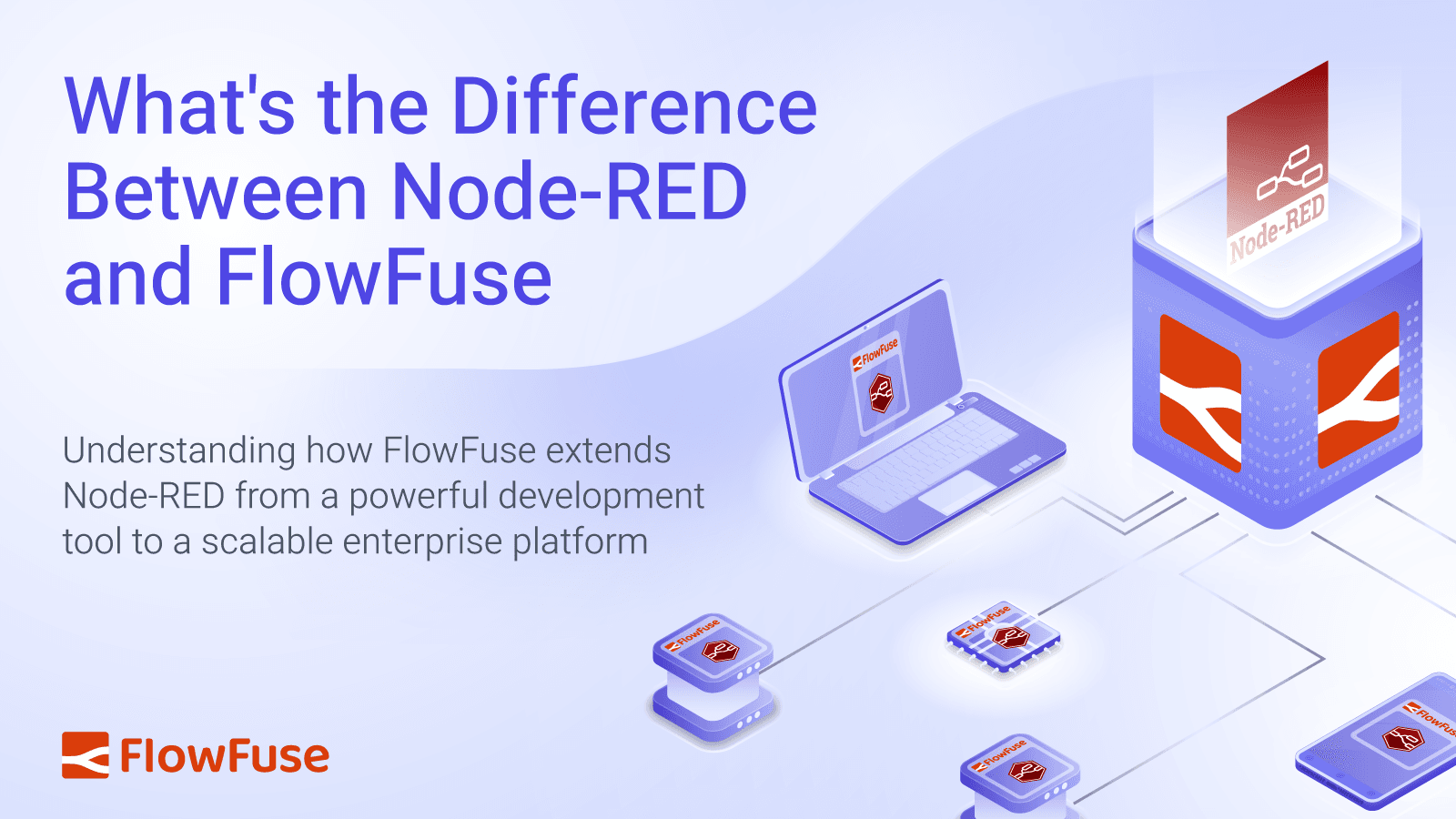
What's the Difference Between Node-RED and FlowFuse
FlowFuse is an industrial data platform built on Node-RED. Many Fortune 500 manufacturers and Industrial IoT companies use it to run mission-critical operations where downtime is not an option.
-
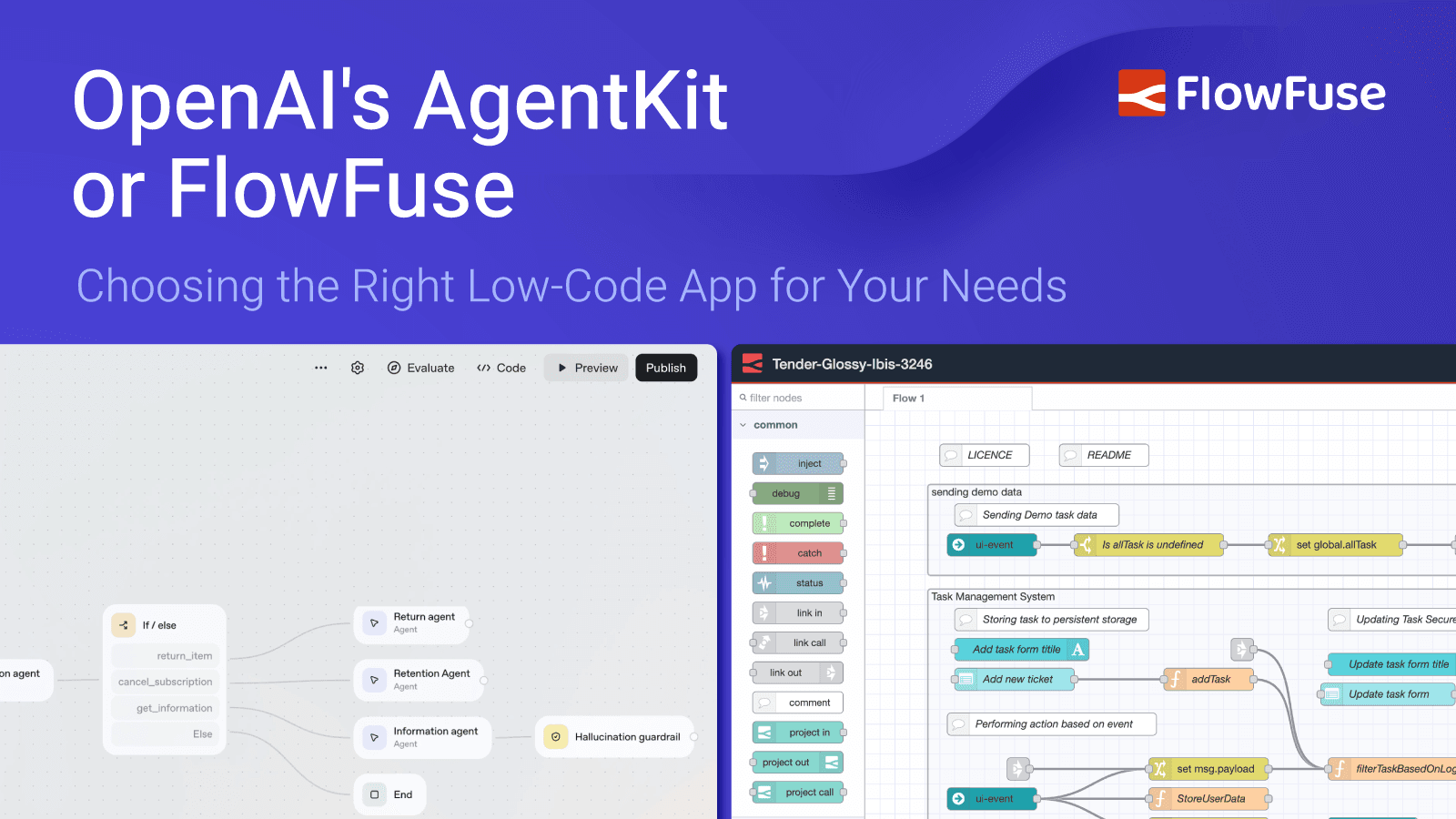
OpenAI's AgentKit or FlowFuse: Choosing the Right Low-Code App for Your Needs
AI is moving fast, and with it, the tools we use to build intelligent applications. Two interesting platforms that have emerged are OpenAI's AgentKit and FlowFuse. While both offer AI capabilities, they are designed for very different purposes. Let's break down the key differences to help you decide which platform is the right fit for your needs.
-

Modbus RTU (RS485/RS422/RS232) Communications with FlowFuse
Modbus RTU is one of the most widely used communication protocols in industrial automation. It allows you to read sensor data, monitor equipment status, and control devices through a simple master-slave architecture. This guide will walk you through everything you need to know to start reading and writing industrial data with FlowFuse (a platform built around Node-RED with enterprise-level capabilities).
-
![Image representing Takt Time: Definition, Formula, How to Calculate with Examples & More [2026 Edition]](/img/takt-time-flowfuse.png)
Takt Time: Definition, Formula, How to Calculate with Examples & More [2026 Edition]
Takt time is one of the most fundamental—and most misunderstood—concepts in lean manufacturing. Despite being widely referenced in textbooks, audits, and production meetings, many factories still calculate takt time incorrectly or treat it as a theoretical number rather than an operational control. The result is familiar: overproduction during low demand, missed deliveries during peak demand, unstable lines, and constant firefighting on the shop floor.
-
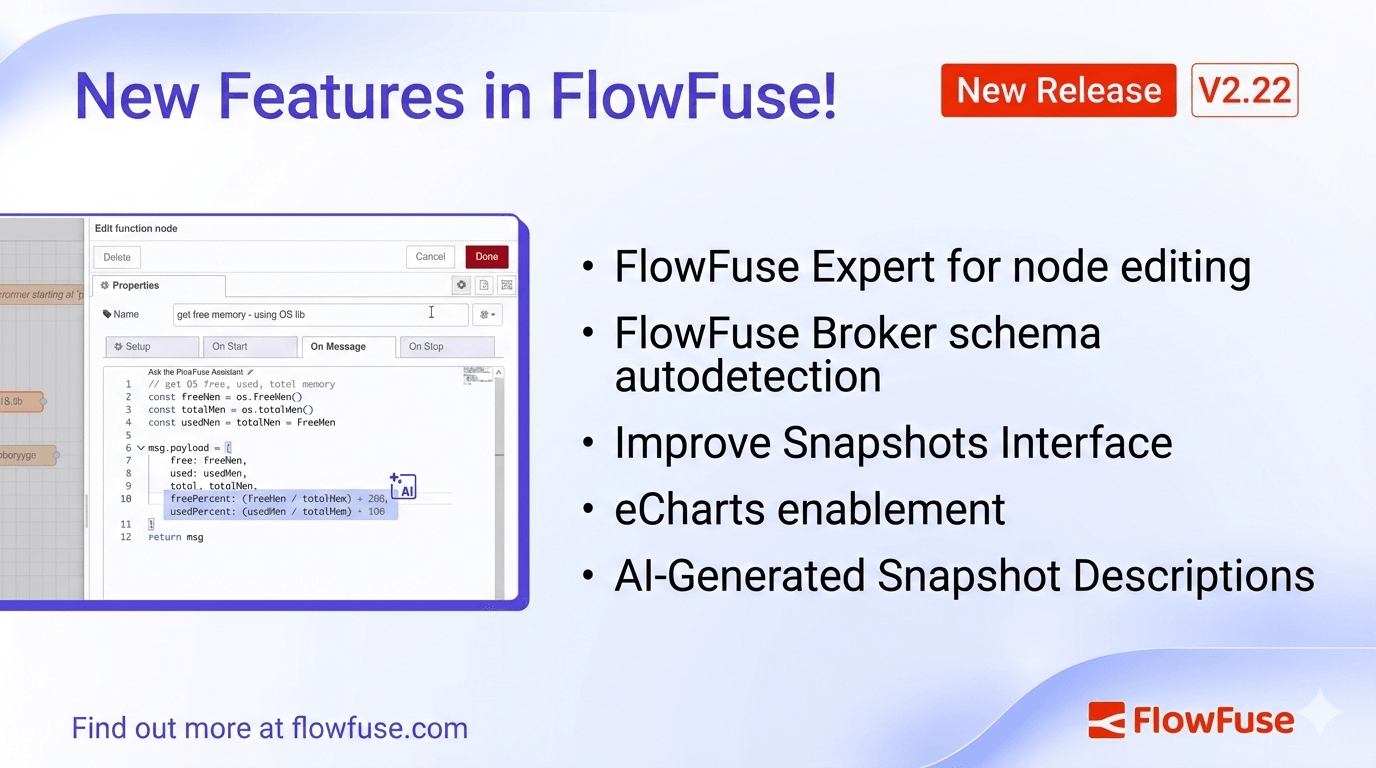
FlowFuse 2.22: FlowFuse Expert for node editing, FlowFuse Broker schema autodetection, Improved Snapshots Interface, eCharts enablement, and FlowFuse Dashboard Updates
FlowFuse 2.22 provides more powerful development by bringing the FlowFuse Assistant to more nodes, supports operational maturity with automatic FlowFuse Broker schema detection, and enhances the developer experience with an improved Snapshots interface, support for more powerful visualizations, a better Device Agent Installer experience, Dashboard updates, and more! Take a look:
-
Download Node-RED for Production: Windows, Mac, Linux, Raspberry Pi (2026)
Installing Node-RED is straightforward. Install Node.js, run a command, and you're ready for visual programming in industrial automation. The real challenge begins when it must run across production lines, connect to PLCs, and stay operational 24/7.
-

Query Your Database with Natural Language Using FlowFuse Expert
Getting data from your database used to mean writing SQL queries. Not anymore. The FlowFuse Expert now lets you ask for what you want in plain English and automatically generates the SQL for you in query node.