Blog
-
Designing a Clear Topic Structure for Your UNS

Topic structuring is not just a technical concern when building a high-performance Unified Namespace (UNS) for manufacturing environments; it's a strategic design choice that can determine the system's scalability, efficiency, and overall effectiveness.
read more... -

Why FlowFuse is the Complete Toolkit For Building UNS?
Unified Namespace (UNS) is changing the way data is managed in industrial environments. It’s becoming the key to more successful and productive operations. Many organizations have already implemented it, and others are still figuring out the best approach and platform to implement it. There are so many tools out there; how do you know which one is right for your UNS? It’s a big decision, and it can be overwhelming. The good news? FlowFuse is the toolkit you’ve been looking for! It’s an all-in-one platform to build your UNS—and it’s open-source!
-
MQTT: The Frontrunner for Your UNS Broker - Part 2
In Part 1, we discussed the reasons behind MQTT's popularity as a choice for Unified Namespace (UNS) implementations; focusing on its lightweight design, low latency, and reliable message delivery. In this second part, we’ll explore additional factors that further establish MQTT as the leading protocol for UNS brokers, diving into its connectivity, scalability, structured topic management.
-
MQTT: The Frontrunner for Your UNS Broker - Part 1
Choosing the right broker for your UNS is crucial. It must support real-time data, scale easily, and integrate seamlessly with devices and services. MQTT often comes out as the best choice for these needs.
-

Data Modeling: The Key to a Successful Unified Namespace
In manufacturing, data flows from various sources—machines, sensors, enterprise systems, and more. A Unified Namespace (UNS) brings all this data into a central hub. However, centralizing data isn't enough to truly call it a UNS. It's not just about aggregating information. A true UNS goes beyond being a data repository; it organizes, structures, and contextualizes that data, transforming it into something valuable and actionable for your business.
-
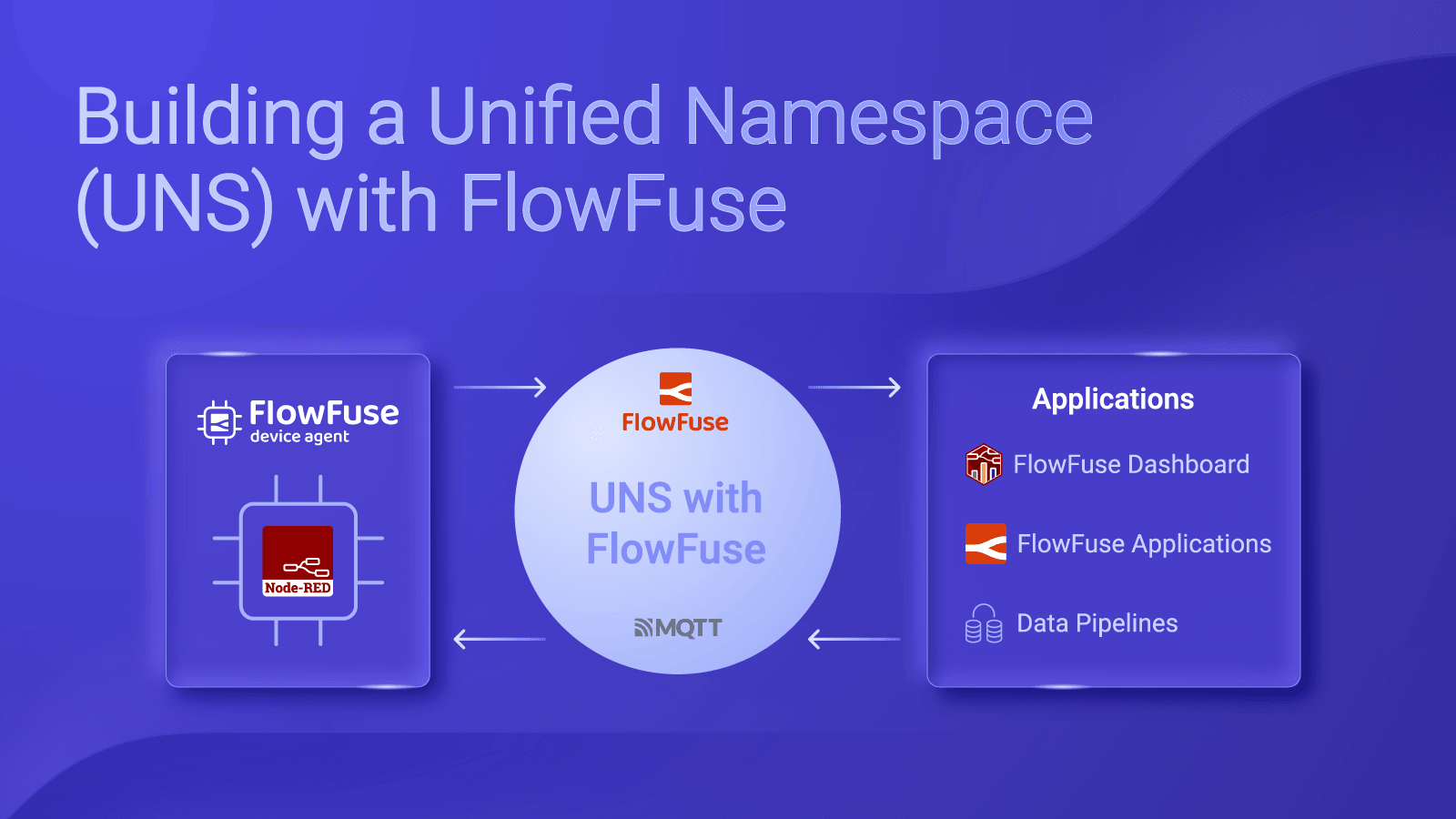
Building a Unified Namespace (UNS) with FlowFuse
As systems and devices become more connected, managing data from different sources can be tricky. A Unified Namespace (UNS) solves this by centralizing all your data in one place, making it easy to access and use.
-

The Death of Point-to-Point: Why You Need a Unified Namespace
Manufacturing has changed significantly over the years, driven by new technology and the need for better communication between systems. In the past, point-to-point (P2P) connections, where devices communicate directly with each other, were the standard. However, as factories become more complex, P2P connections are no longer practical. This article explains why P2P connections are outdated and how a Unified Namespace (UNS) offers a better, more flexible solution.
-
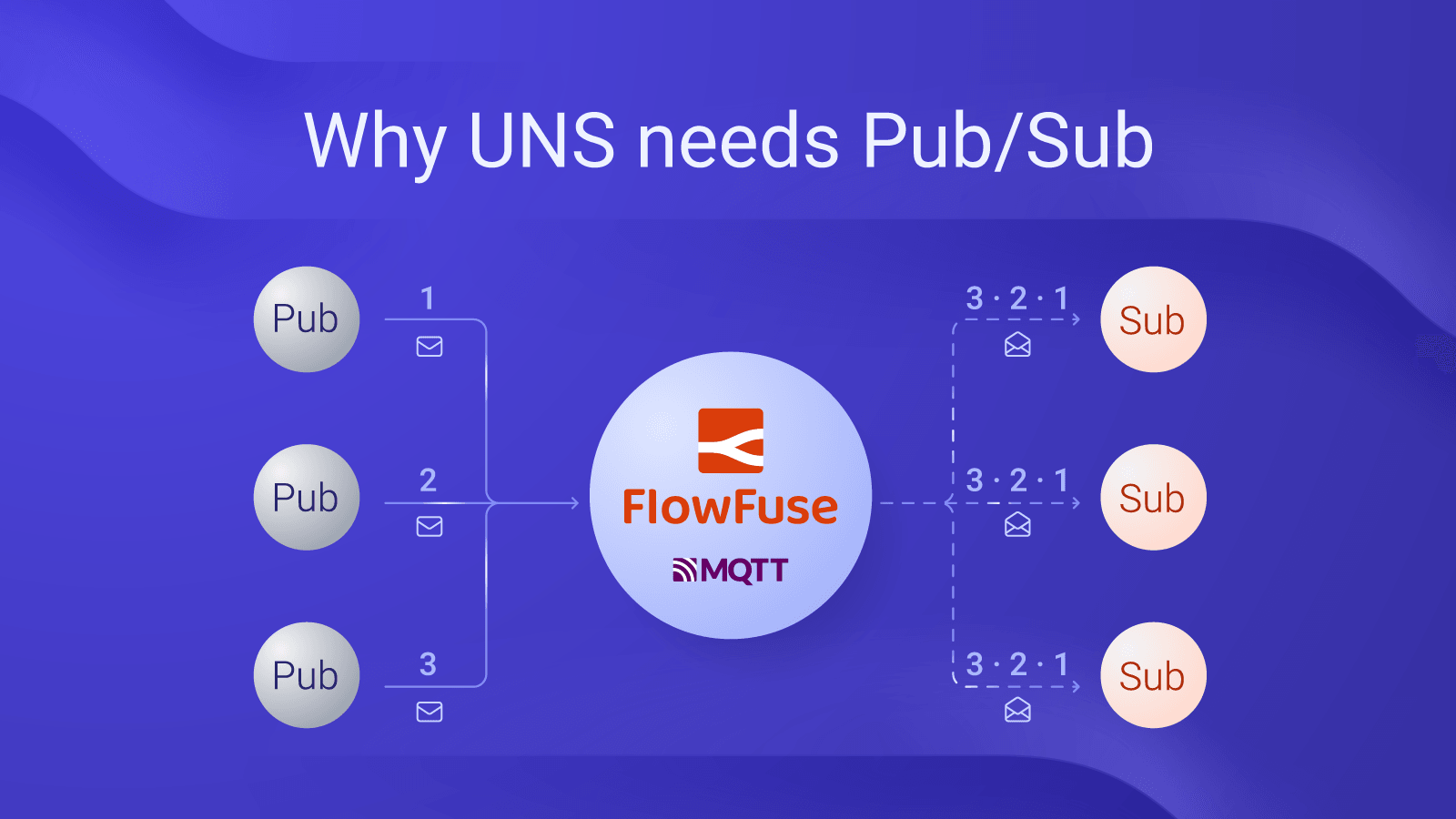
Why UNS needs Pub/Sub
As the manufacturing industry evolves and becomes increasingly connected through the Industrial Internet of Things (IIoT), the concept of a Unified Namespace (UNS) has emerged as a critical architecture for centralizing and organizing data. UNS serves as a central reference point where all operational data, from machines to the enterprise, can be accessed in a consistent and structured way. Over time, more and more manufacturers have adopted UNS to simplify data integration and improve real-time visibility across systems.
If you're unfamiliar with UNS, please read our Introduction to Unified Namespace for a basic understanding of UNS.
-
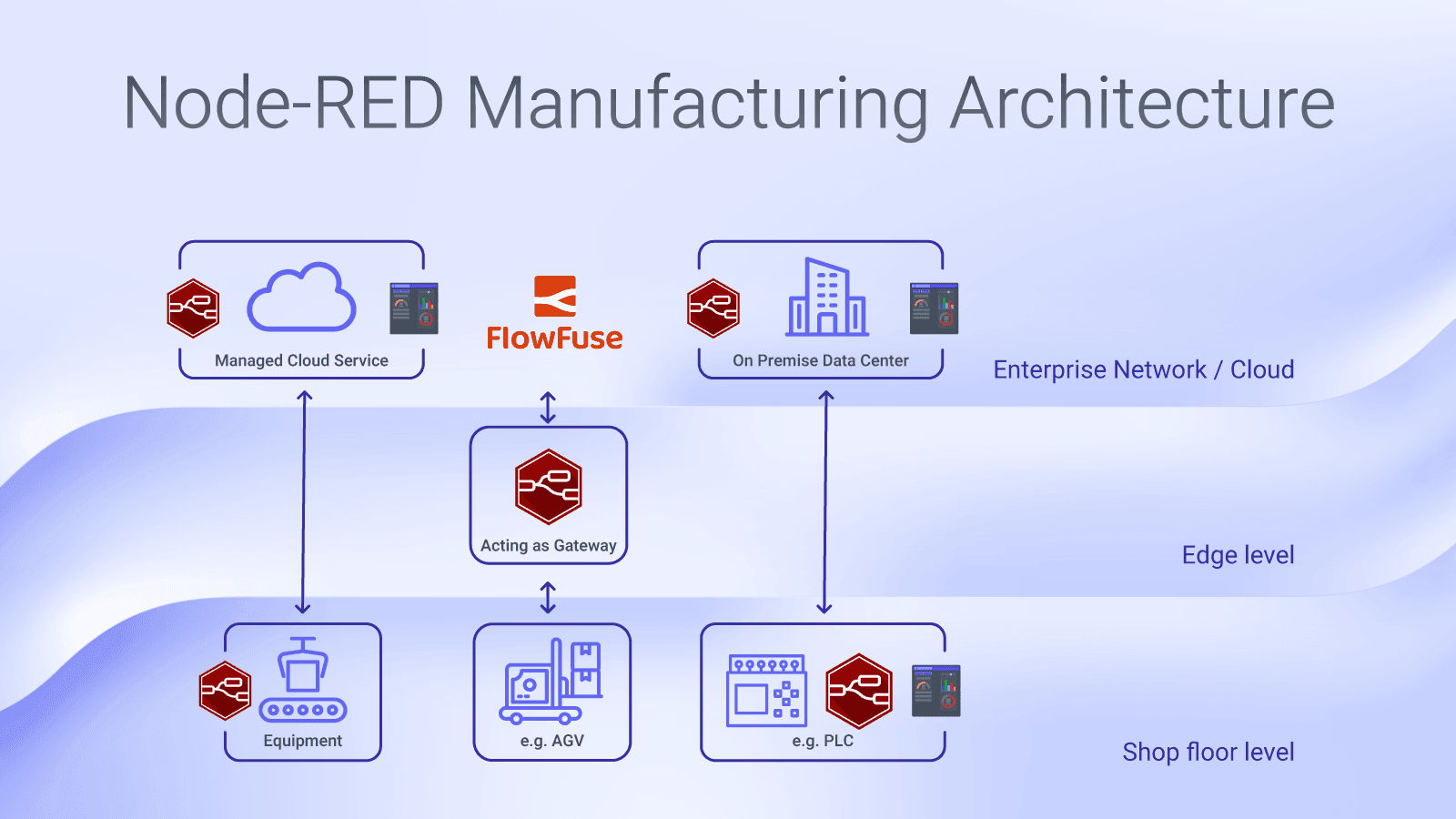
Node-RED Manufacturing Architecture
The architecture of a factory's Node-RED infrastructure is a common topic of discussion and inquiry. Fundamentally, my response to such queries unfolds in two parts. Initially, the focus must be on data organization. I champion a structure centered around a Unified Namespace, a concept I explore in depth in this article "Node-RED in a Unified Namespace Architecture." However, this is only one part of the inquiry. The other part of the question delves into the positioning of FlowFuse and Node-RED within the network infrastructure.
-
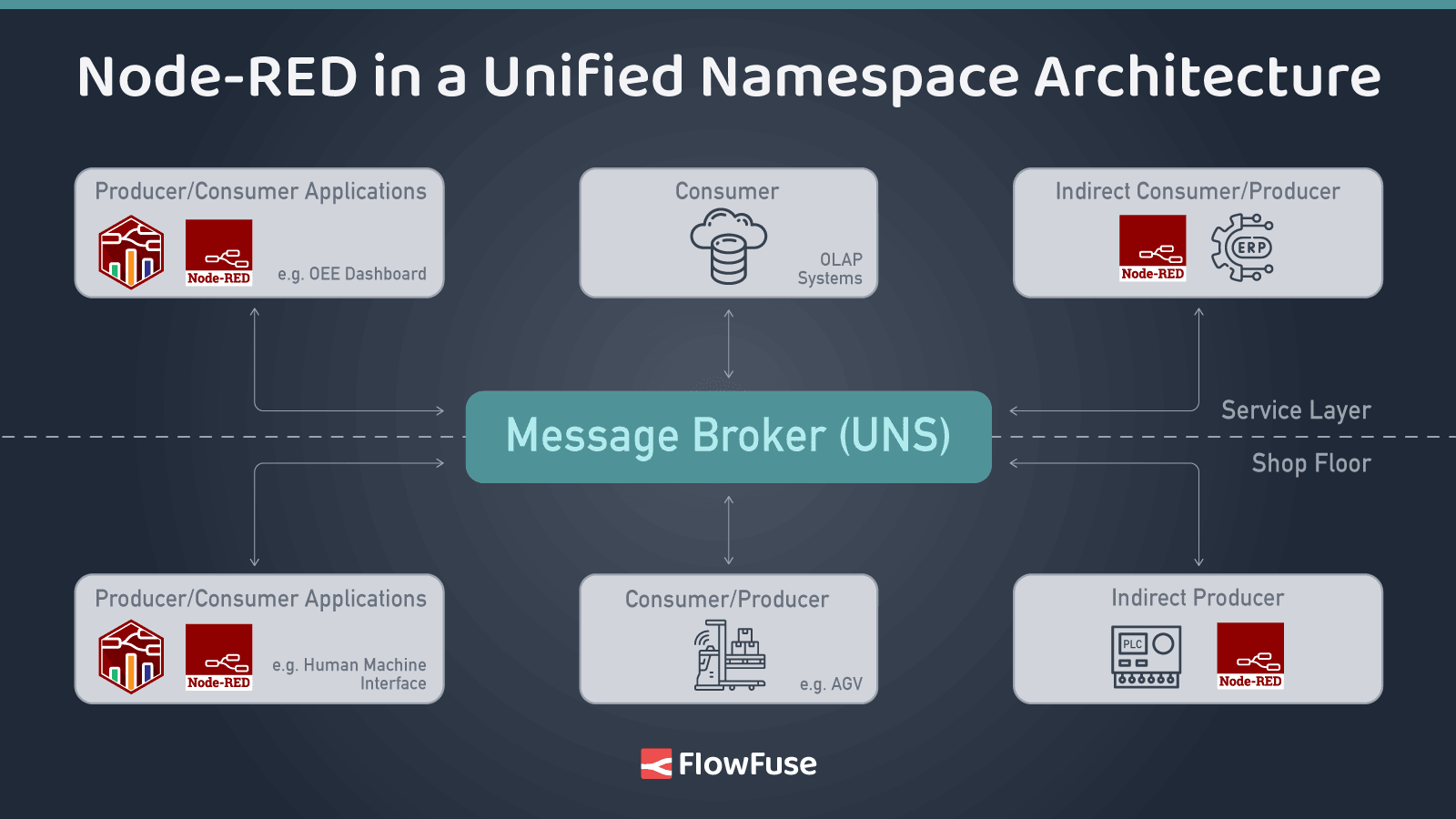
Node-RED in a Unified Namespace Architecture
As we embark on the journey toward a more interconnected industrial environment, the emergence of a Unified Namespace (UNS) as the fundamental framework for facilitating communication among various systems and devices has become a focal point of discussion. I've often been queried about the role of Node-RED in a UNS architecture. To illuminate this, let's delve into an exemplary UNS architecture, underlining the classic use cases for Node-RED within this framework.
-
Node-RED: The perfect adapter and middleware for your UNS
Digitalization is at the inflection point where it’s been adopted enough that the additional investments provided better and better ROIs for organizations. The next bump in ROI will be achieved through the UNS. A torrent of information is more useful when structured and adapted for new use-cases. Either a performance dashboard, Artificial Intelligence, or station metrics – each is built faster when the data is readily available and well structured? As a company started around Node-RED, we’ve not spoken a lot where FlowFuse fits into the picture, which is what this post is about.
-

Unified Namespace: When to Use It, and When to Choose Something Else
At FlowFuse, we're convinced of the Unified Namespace (UNS) architecture for IoT cases. It's a powerful tool that can make information much more readily available and easy to consume. However, as with any architecture, there are times when it's not the best choice. In this blog post, we'll discuss when to use the UNS and when to consider other options.
-

Selecting a broker for your Unified Namespace
When starting to roll out a new data distribution architecture for the unified namespace (UNS), one of the first questions you'll ask is, "What broker should I select for my UNS? The broker must implement a publish-subscribe (pub-sub) pattern, though that leaves plenty of options.
-
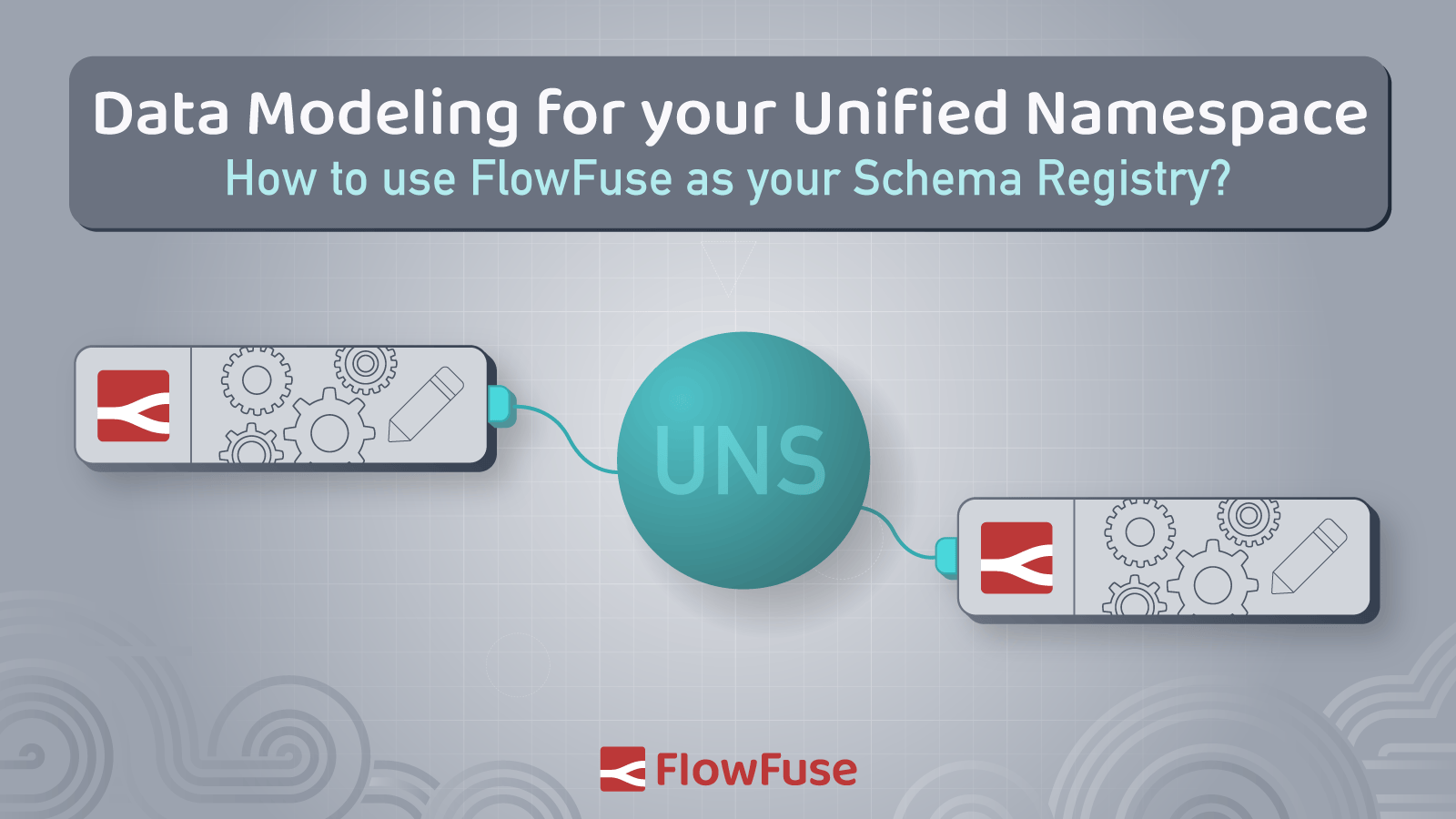
Data Modeling for your Unified Namespace
In the realm of industrial manufacturing, the concept of a Unified Namespace (UNS) emerges as a pivotal instrument for enhanced communication within a manufacturing network framework. Predicated on an event-driven architectural model, this approach advocates for the universal accessibility of data, irrespective of the immediate presence of a data consumer.
-
Introduction to the Unified Namespace (UNS) – 2026 Updated Guide
As your organization is generating more data there’s key architectural decisions to be made to ensure the full value can be unlocked and you’re leveraging not just the tip of the iceberg. The Unified Namespace (UNS) provides a blueprint to allow data to be consumed by many data-consumers. FlowFuse helps you manage this migration and the operationalization of your data.
-
Why the Automation Pyramid blocks digital transformation - The Role of Unified Namespace
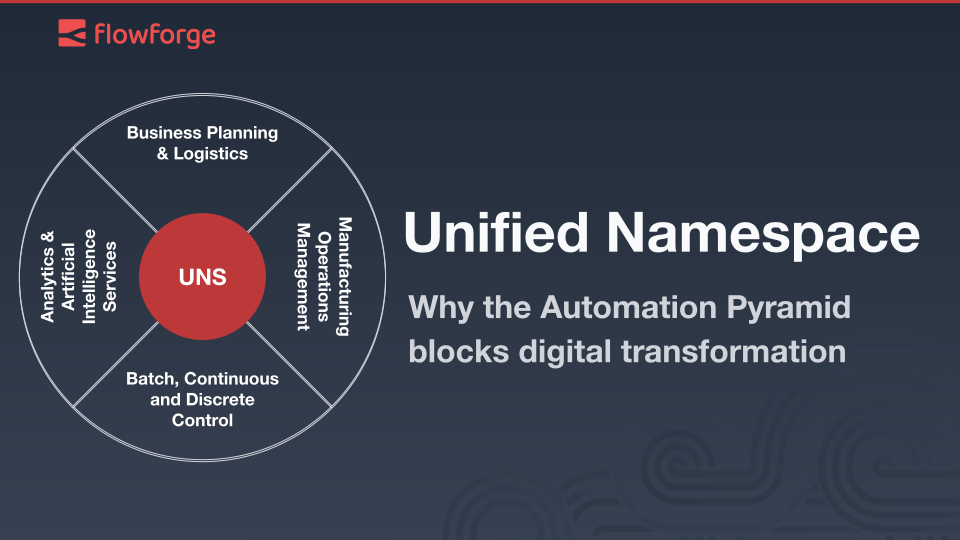
A few years ago, I wrote an article, in German, detailing my understanding of how the Automation Pyramid, a widely adopted reference model for the IT landscape of manufacturing firms, is essentially hindering digital transformation. Now, as conversations around the Unified Namespace (UNS) and particular frameworks continue to evolve, I revisit my earlier notions, review the latest updates to reference frameworks, and update my article.